

The Wittgenstein Cannonball

The Wittgenstein Cannonball
A “Monument” to the Patriotic War of 1812
According to legend, during the storming of Polotsk on October 7, 1812, by the 1st Russian Infantry Corps under the command of General of Cavalry Pyotr Wittgenstein, as Russian artillery shelled French and Bavarian positions, one of the cannonballs flew through a first-floor window of the Polotsk Jesuit Academy. It firmly embedded itself halfway into the wall, approximately 1 meter above the floor. As it was later discovered, this was actually a bomb that failed to detonate because its fuse hole was positioned inside the wall.
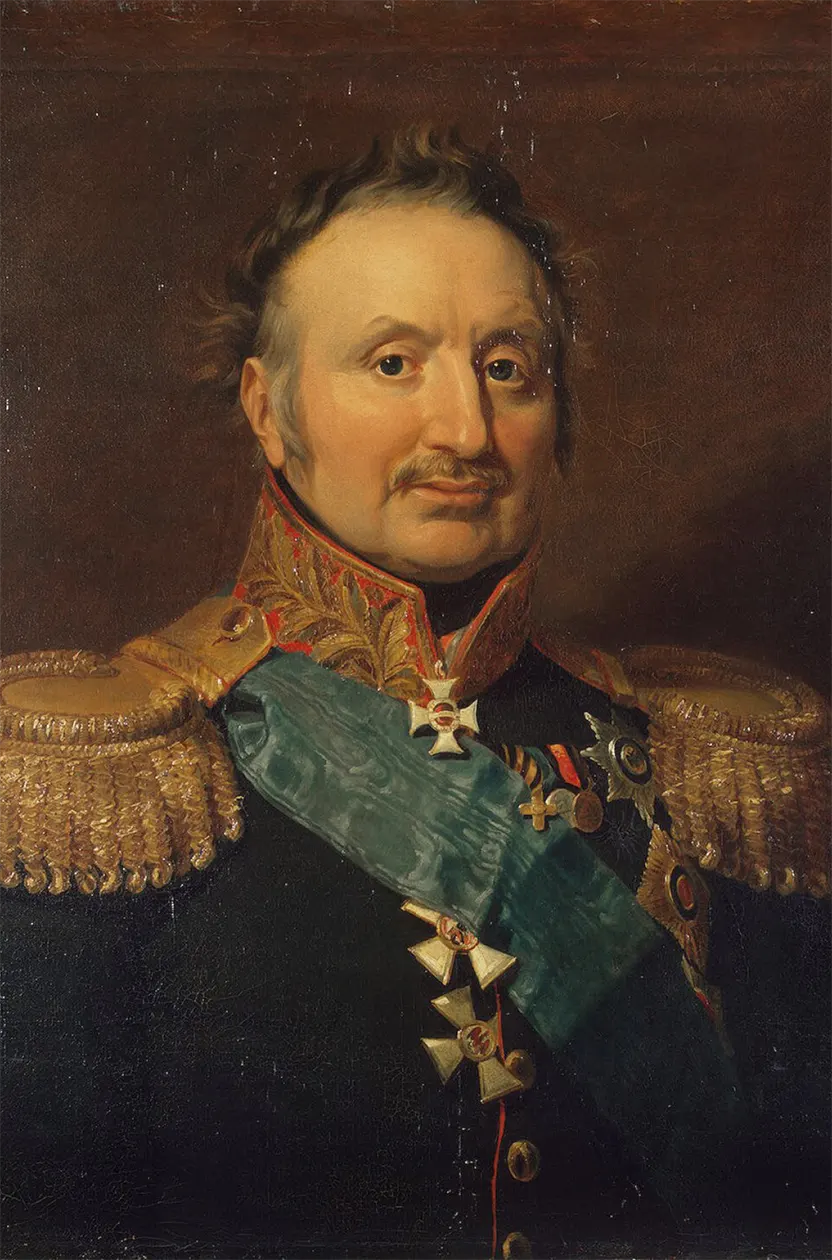
P.C. Wittgenstein
When the Polotsk Cadet Corps was established in the former academy buildings in 1835, the cannonball did not merely serve as a tangible reminder for its cadets of the heroic history of the War of 1812; it became a symbol of their pride in belonging to the shared glory of their fathers and compatriots who achieved victory over Napoleon.
The Cadet Relic
Above the cannonball, a semicircular copper plaque was affixed, engraved with “October 7, 1812”. Soon, traditions associated with it emerged.
For instance, before the first formation of newly enrolled cadets for morning prayer, an order was issued by senior cadets: all first-year cadets, when passing through the corridor to the dining hall and back, were to stand “at attention – eyes on the bomb!”, with their arms held stiffly at their sides and head turned to the left. In the dining hall, the new cadets discovered that all spoons, knives, forks, soup tureens, and dishes bore an embossed image of this bomb.
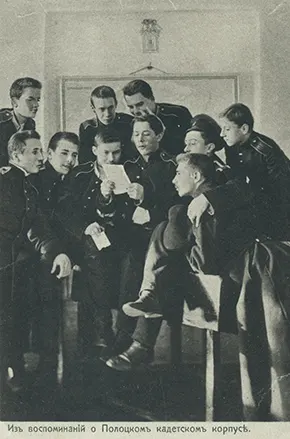
In one of the classes (photo 1)
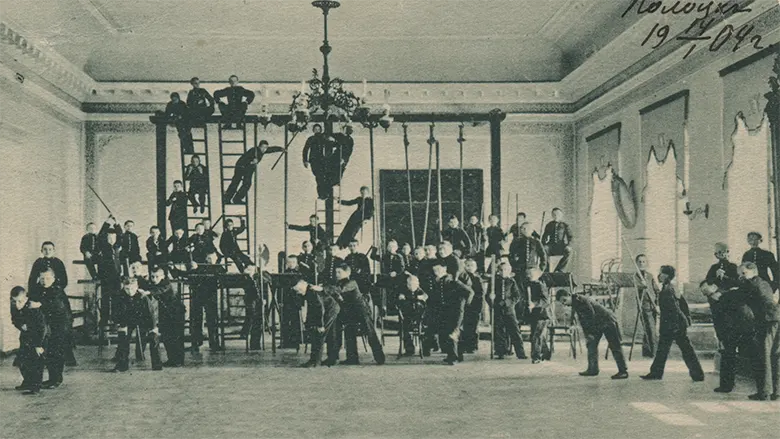
In the Alexander Hall (photo 2)
Photos from the Archive of NPHCMR
The Core was kept polished to a brilliant shine. On every anniversary of the storming of Polotsk, October 7th, an unofficial parade was held around it. During a solemn ceremony, a new congratulation for the Cor’s “Angel Day” was read aloud, and all cadets, upon passing it, would kiss it. The corps administration, aware of these rituals, eventually permitted them to be carried out openly and without concealment.
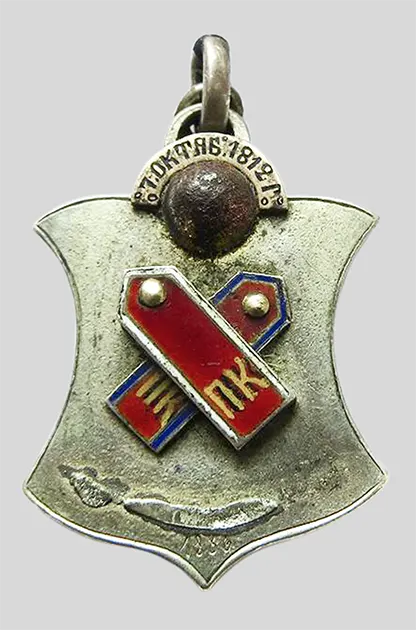
The prestige of “Wittenstein’s Core” among cadets and instructors was so high that its image was featured on both the tokens of the Polotsk Cadet Corps and the graduation badge. These items, as a result, unmistakably distinguished the institution from any other.
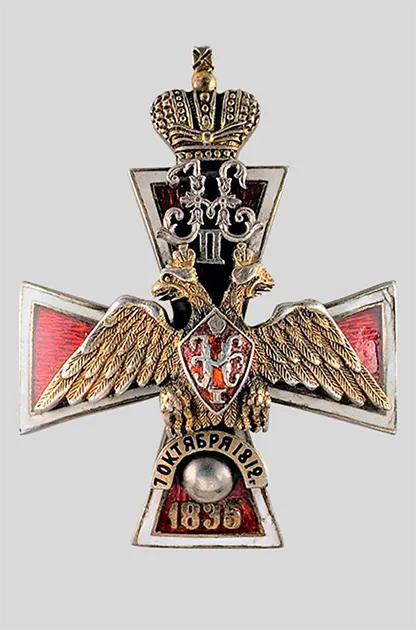
Polotsk Cadet Corps Graduation Badge (Photo 1)
Token Commemorating the 50th Anniversary of the Polotsk Cadet Corps (Photo 2)
Photos from the Archive of NPHCMR
The traditions of honoring the cannonball persisted until the corps’ evacuation from the city in 1914, due to the approaching front during World War I. Most of the relics were removed, but the cannonball remained in place. Everyone hoped to return here after the war, but these hopes were never realized.
The Revived Legend
Tracing the subsequent fate of the cannonball proved very difficult.
A military hospital for the Russian army was established in the former Cadet Corps building. The inscribed projectile remained, serving as a military relic. From February to November 1918, Polotsk was under the occupation of Imperial Germany. An occupation garrison, headquarters, and a soldiers’ club were established in the buildings.
With the advent of Soviet power, it was decided to establish courses for Red Commanders here. Bolshevik ideology rejected all that had come before, including the successes of the Russian army in 1812. Naturally, the projectile was removed from the wall. A symbol of the cadets, “enemies of the revolution”, was of no use to the new society. However, the projectile was most likely put to some use. It could have been used either as a weight for the lever scales in the corps’ kitchen or as part of an emergency valve that protected the heating boiler from explosion.
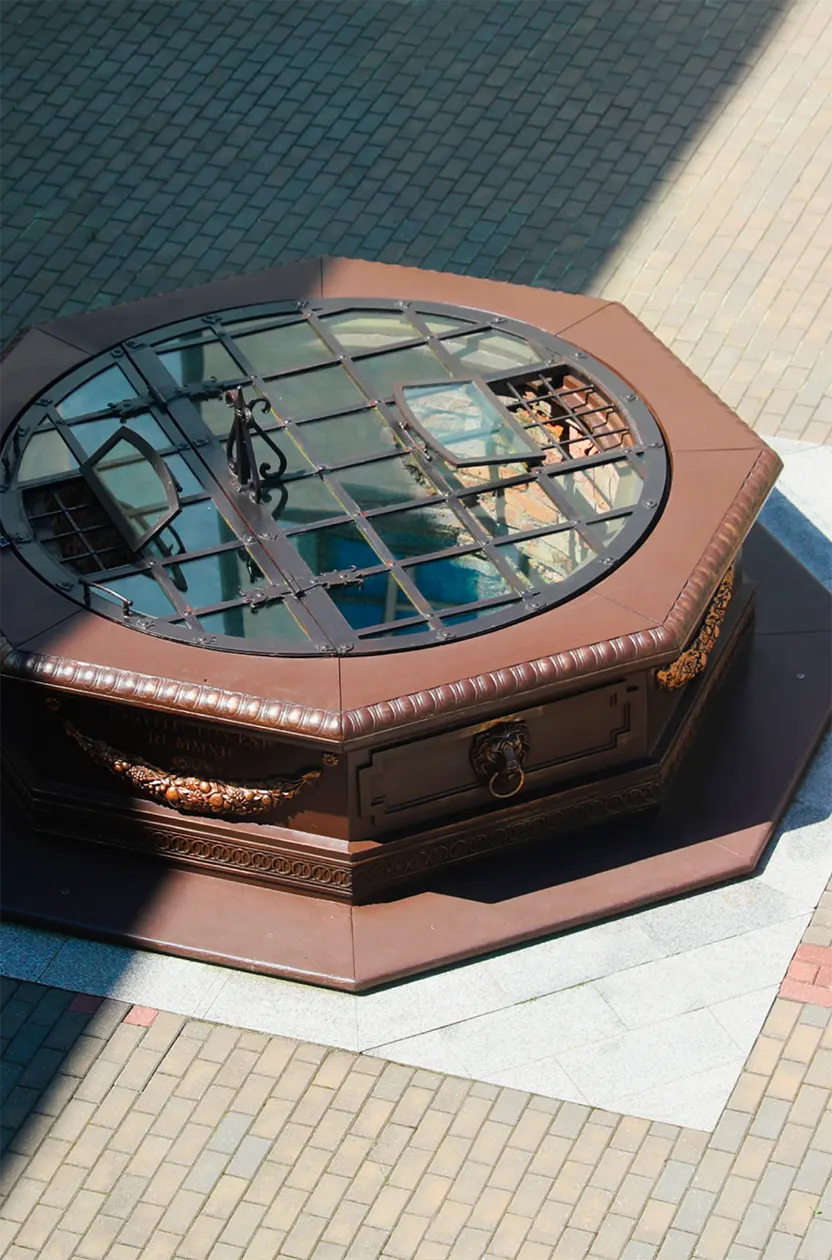
By this time, the equipment of the old Jesuit well had again fallen into disrepair, and there was no one left to fix it. The buildings’ water supply was then switched to an artesian well. The well was filled with construction debris, and old-fashioned crockery was also found inside.
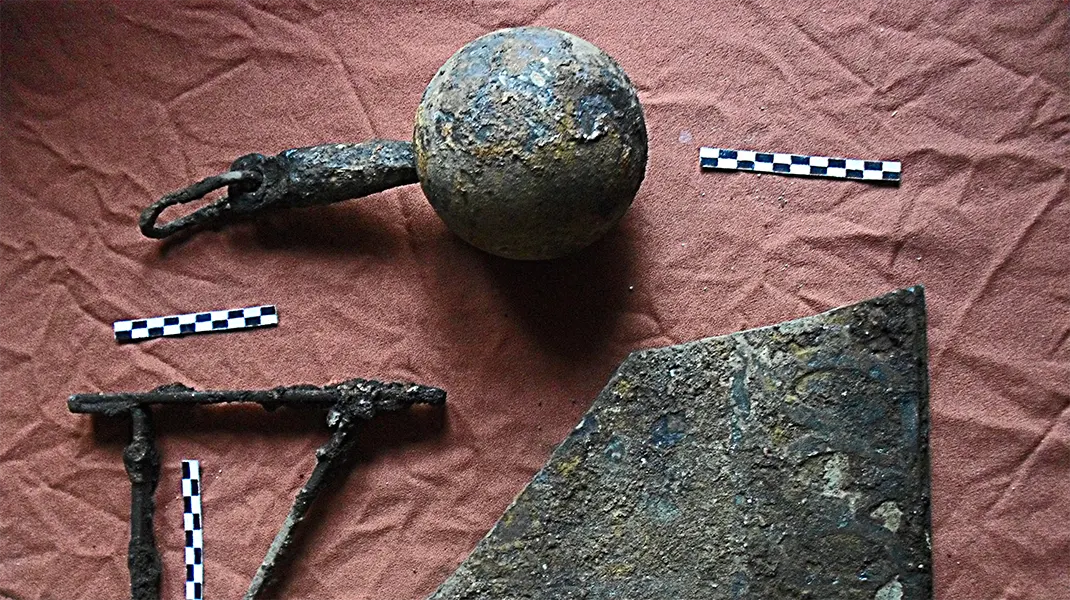
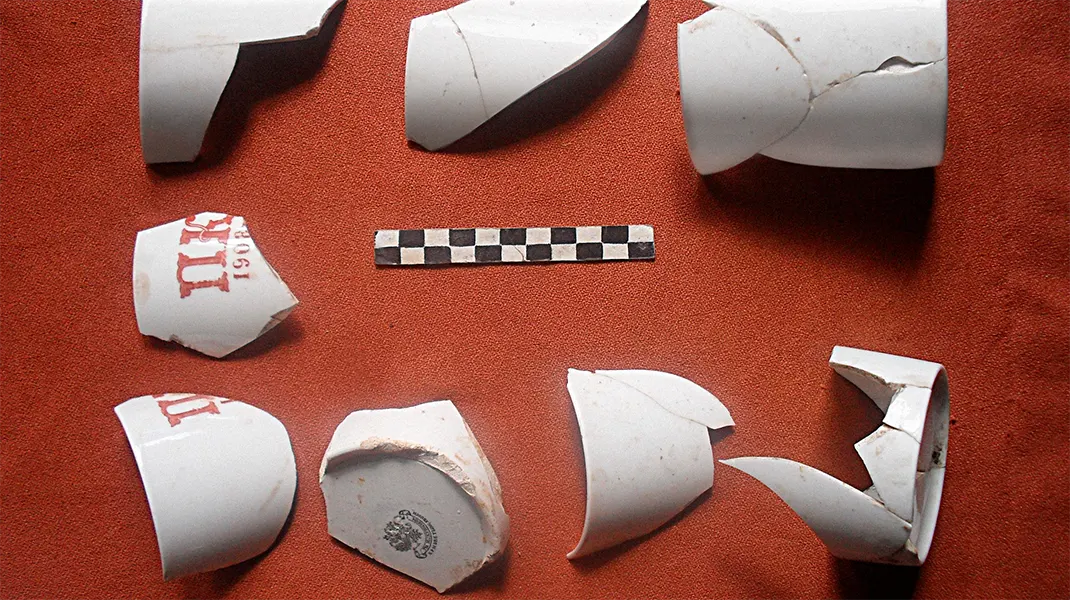
In 2012, during the restoration of the well, an artillery shell was discovered at the bottom, alongside remnants of crockery bearing the “P.K.” stamp. Following an investigation, it can be confidently asserted that this is indeed the legendary “Wittgenstein Cannonball”, which, more than 100 years later, once again took its place in the first-floor corridor, becoming the central element of the Gallery of Graduates of the Polotsk Cadet Corps.