




About the project
Project Bell
Enhancement of Lifelong Learning in Belarus (BELL)
International Project of the Erasmus+ Programme (Capacity Building in Higher Education module)
The project "Enhancement of Lifelong Learning in Belarus" involves the development of training courses at the lifelong learning and retraining institutes of six regional universities located across five regions of the country. These courses will help improve citizens' knowledge in various socially and economically relevant areas that are currently in demand.
The distance and blended learning courses in lifelong learning being developed for regional populations will help make additional education for youth and adults more accessible and effective, in line with the national policy of the Republic of Belarus.
The project aims to strengthen cooperation between universities and regional communities in the field of lifelong learning by offering a wide range of educational programmes that utilize various learning technologies.
Project coordinator: Centre for lifelong learning at Rezekne Academy of Technologies (Latvia).
Project Website: https://bell.psu.by
Participating countries: Belarus, Latvia, Spain, Sweden, United Kingdom.
Project implementation Period: 01.09.2017-31.08.2019.


Irina Pozdnyakova
Head of the Project Working Group at Polotsk University, Dean of the Faculty of Finance and Economics.
Telephone: +375 214 59 95 19
Address: 29 Blokhin, 229
Novopolotsk, Belarus, 211440
Address: 29 Blokhin, 229
Novopolotsk, Belarus, 211440
Project participants
Educational institutions of the European Union countries
- Rezekne Academy of Technologies (Latvia)
- University of Cadiz (Spain)
- Linnaeus University (Sweden)
- Open University (UK)
Educational institutions of the Republic of Belarus
- Polotsk State University
- Belarusian State of the Orders of the October Revolution and the Order of the Labour Red Banner Agricultural Academy
- Sukhoi State Technical University of Gomel
- Brest State Technical University
- Yanka Kupala State University of Grodno
- Vitebsk State University named after P.M. Masherov
Associated partners
- Rezekne Academy of Technologies (Latvia)
- University of Cadiz (Spain)
- Linnaeus University (Sweden)
- Polotsk District Executive Committee
- Goretsky District Executive Committee
- Gomel District Executive Committee
- Brest District Executive Committee
- Grodno District Executive Committee
- Vitebsk District Executive Committee
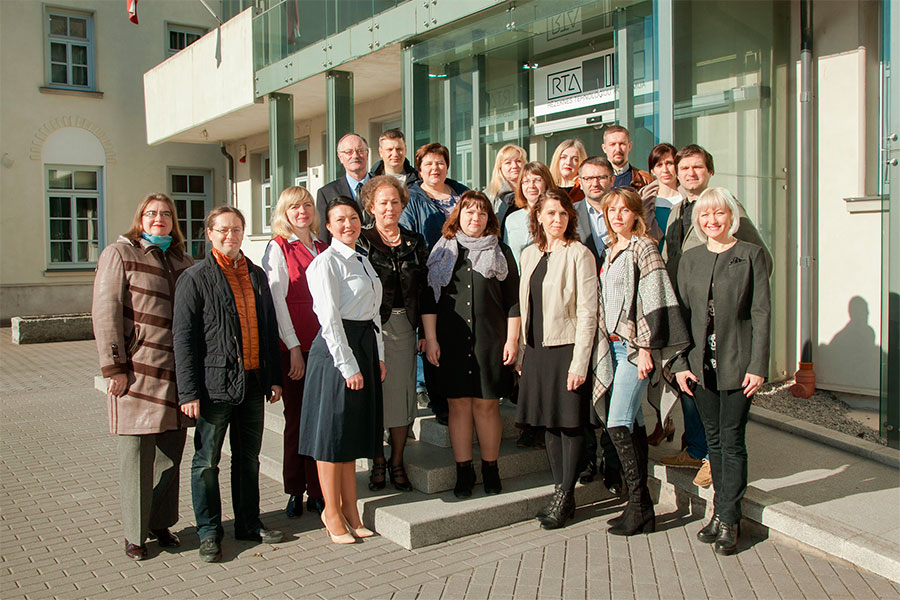
Project participants
Project content
Project goal:
- To develop and enhance lifelong learning in Belarus through the effective use of distance learning and Bologna Process tools to support the development of the regional labor market.
Project objectives:
- To develop interuniversity cooperation in the field of lifelong learning in the regions of Belarus by integrating six leading regional universities into an Interuniversity Lifelong Learning Network (ILLN) for distance learning.
- To train university administrative staff and faculty to ensure the ILLN operates in accordance with Bologna Process principles, drawing on best practices from European partner universities.
- To identify specific topics for the development of five new distance and blended learning courses in lifelong learning – in English, information technology, entrepreneurship, financial literacy, and legal literacy – aimed at meeting the needs of regional communities.
- To develop and pilot five new distance (blended) lifelong learning courses for the general public.
- To evaluate the pilot versions of the courses and enhance their teaching, learning, and information resources.
- To monitor the quality of project implementation.
- To raise awareness of the project among regional communities and disseminate information about its results.
- To effectively manage the project and its outcomes during the funding period and ensure sustainability after EU support ends.
Expected outcomes:
- Enhancement of the academic staff's ability to develop curricula using innovative teaching technologies
- Improvement of management systems at the lifelong learning and retraining institutes of partner universities
- Integration of newly developed curricula into existing course content
- Use of project-developed teaching materials for future delivery of similar courses
- Increase in the number of participants enrolled in training courses at partner universities
- Improvement of educational quality at Belarusian universities involved in project implementation
- Strengthened cooperation between universities and regional communities in the field of lifelong learning
- Increased public awareness and knowledge in various socially and economically relevant areas.

