

Polotsk Higher Piarists School (1822-1830)

Polotsk Higher Piarists School (1822-1830)
The University of Vilna could benefit from the Jesuit Order’s expulsion. It had pretentions both to the sole domination over the former GDL in educational sphere and at least to a part of the property that used to belong to the Jesuits. Then, the Ministry of Public Education received a proposal to establish a secular juridical Lyceum in the building of the Jesuit Academy. In fact, it was the faculty of Law of Vilna University, modelled after Demidov Lyceum of Yaroslavl. Moreover, there were other projects prepared as well.
Nevertheless, Alexander I decided to use the Jesuit’s heritage in a different way. The proposal of Vilna University did not pass for the prosaic reason of the shortage of funds to maintain another educational establishment. The proposal, however, went to other monastic orders, which could cope with the financing of schools.
The Piarist Order monks became the successors of the Jesuits in Polotsk. The University of Vilna was quite satisfied with such an outcome, because their relations with the Piarists were friendly and their contacts were close. Furthermore, there were quite a few Piarist graduates among the teachers of the University. In response to the Piarists’ request to entrust them the reorganization of the former Jesuit educational institutions, the Scientific Committee ordered the Order to organize a school of higher sciences in Polotsk. Then, on April 1822 the decision was approved by the Emperor. Later, in August of the same year, the Piarists received the former Jesuit church, buildings of the former Academy, their libraries and rooms of mineralogy and physics.
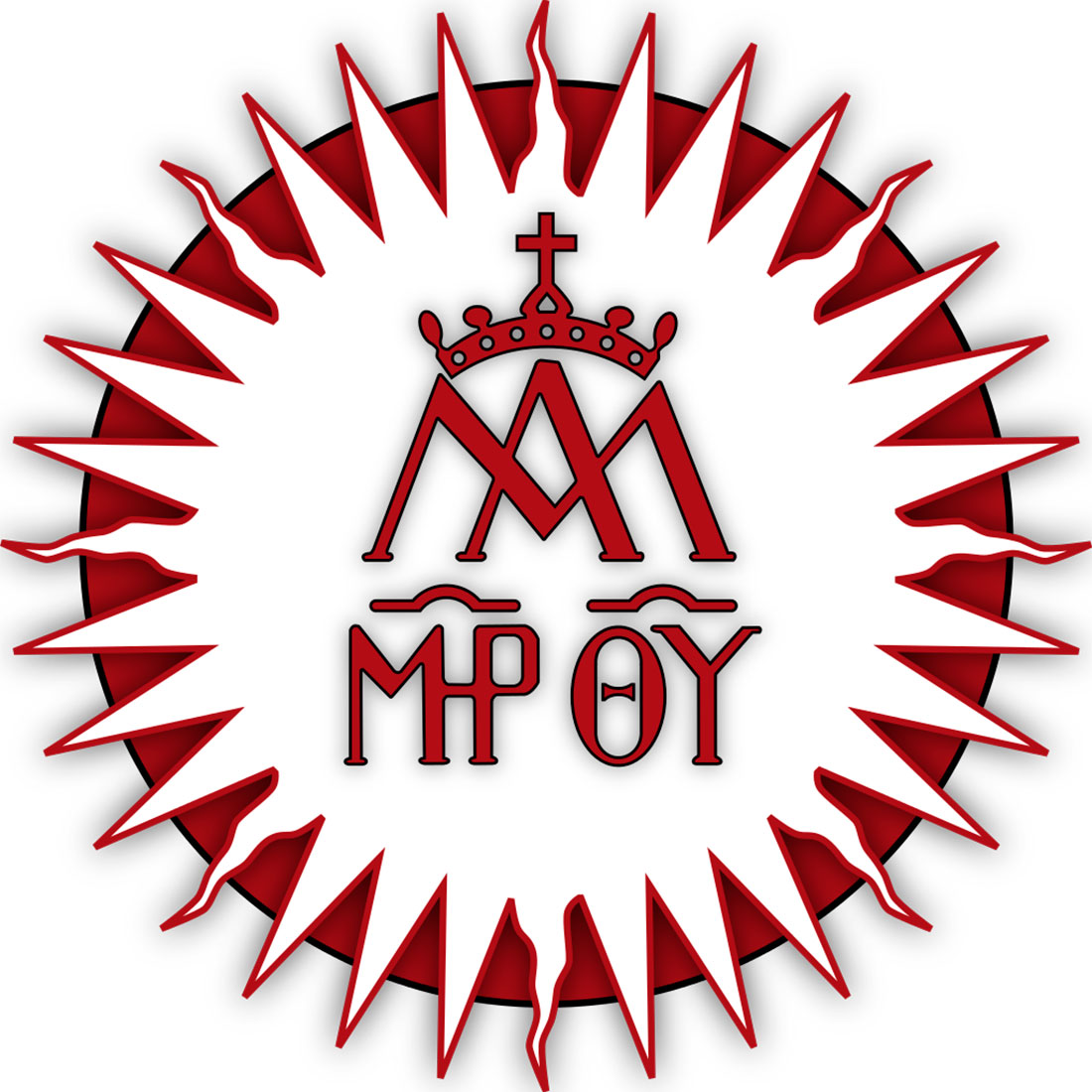
Coat of Arms of the Piarist Orde
On September 1 of 1822 the lessons began in the four primary forms and on September 15 in the senior courses of the Higher Piarists School. There were three departments in the school according to the statute. The first department was a preparatory class (or a parish school). The second department consisted of four grades and approximately corresponded to the 2nd gymnasium grade. The third department consisted of three annual grades called “courses of higher sciences”. More complex disciplines were taught at the last stage of training. There were taught, however, not only typical gymnasium subjects, but also those that were part of the lyceums’ programs or even part of junior courses of universities. Therefore, it is not surprising that many Russian officials, who attended the school, found it very similar to lyceums and described it as a higher educational establishment. More than 200 people studied at Polotsk Higher Piarists School.
However, a dark cloud had appeared soon on the Piarists’ school horizon. That was the fault of freedom-loving students and some young teachers, who turned out to be involved in the organization of a secret society connected with the figures and organizations of the Polish national movement at the University of Vilna. Perhaps, Joachim Lelewel (1786-1861) contributed to the establishment of these contacts. J. Lelewel was a deputy professor of history at Vilna University, a well-known scientist (the founder of the romantic School in Polish historiography) and a public figure who came to Polotsk with lectures for students and teachers of the school in 1822.
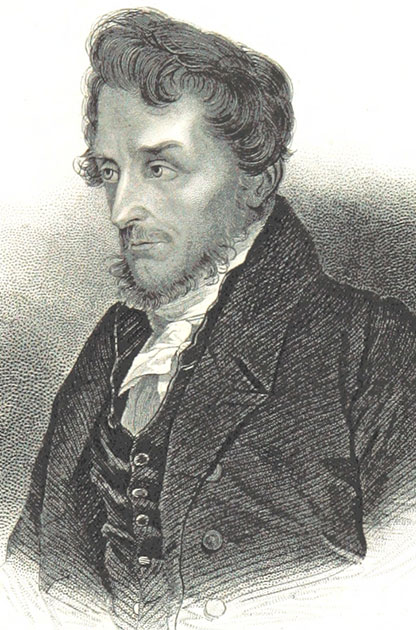
Joachim Lelewel
As a result of a quick investigation, in 1824 the prefect of the Lashkevich Schools as well as two teachers, M. Brodovich (General History and Law) and K. Lvovich (Natural History), had to leave their posts. In 1824, to prevent further sedition spreading from the University of Vilna, Polotsk
educational institutions together with other educational establishments of Vitebsk and Mogilev provinces were transferred from Vilnius educational district to St. Petersburg’s one.
This measure, however, did not have the proper effect. The darkest days came for the Piarists school. In 1826, leaflets of revolutionary content appeared in Polotsk. On this case Joseph Dobashinsky, a 17-years-old boy, a 3rd-grader of the school, was arrested. In 1826, after the program reconsideration, the study of the Russian language became more profound. Besides, a special school police operated there.
After the creation of a separate Belarusian educational district in 1829, the school got into a critical situation. G. I. Kartashevsky, the head of the Belarusian educational district, stated: "the youth education is entrusted to monks, who don’t think about governmental benefit" and began a war against the orders. It became known about the plans for the Uniate Spiritual Academy founding in Polotsk. However, these two educational establishments would not be able to co-exist in the town. So the Piarists were preparing to leave the stage too. The decree on the dissolution of the school was published on February 21, 1830.
Abolition of the Piarists school raise a question about the richest library, which existence, henceforth, became meaningless. State dignitaries of the highest rank and even the Emperor himself expressed interest in the fate of the books, collected by the Jesuits for more than two centuries. Nicholas I ordered D. N. Bludov, the Minister of the Interior, to gather exhaustive information about the former Jesuit library and prepare proposals for the possible distribution of books among the interested institutions. As it was separately noted in the document, the books on mathematics and military art were to be left at the disposal of the Cadet Corps, which would soon open in Polotsk.
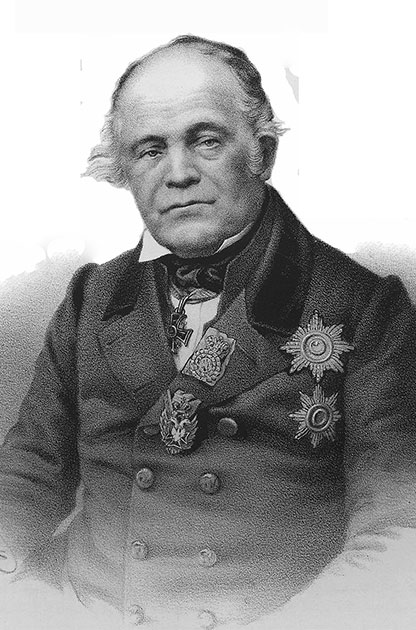
D. N. Bludov
According to the results of Polotsk book stocks study, D. N. Bludov considered it reasonable to distribute the most valuable books among the main book collections of the country. The Imperial Public Library was to receive the necessary editions of ancient and modern authors, first of all the rarest and richest of them. St. Petersburg University could count on books on pedagogy of higher education and literature in Oriental languages, and Moscow University – on works on medicine ("for this university has a medical faculty, and there is no good library for this part in it"). Part of the former Jesuit library (publications relating to the system and canons of the Catholic Church, dictionaries, etc.) was proposed to be transferred to the General Directorate of Religious Affairs of foreign faiths. According to D. N. Bludov’s point of view, Belarusian gymnasiums could claim only Polish-speaking historical and literary works, and Catholic educational institutions could claim the editions of spiritual, preaching, polemical and catechetical character. The books on mathematics, physics, chemistry, historical and artistic literature in the living languages, as well as the corresponding dictionaries of these languages were supposed to be given to Polotsk Cadet Corps.
A special commission was set up by order of the Minister of the Interior for the final distribution of books from the former Jesuit library. There were represented the interested parties in the commission: the Ministry of Education, the General Directorate of Religious Affairs of Foreign Religions and the Military Department. After two and a half months of work, it was decided to transfer 266 books to the Imperial Public Library, 3,788 (and another 576 incomplete, i. e. not fully preserved) to St. Petersburg University, 343 (22 incomplete) to Moscow University, 1396 (240 incomplete) to the "Ministry of Cults" and 3219 (345 incomplete) to the Roman Catholic College and Seminary. Only 1149 volumes and 328 incomplete editions remained for the cadet corps in Polotsk! Thus, the history of education in Polotsk continued.
Despite its short history, Polotsk Higher Piarists School trained a number of prominent figures in the fields of science and art. One of the Piarists pupils was Cajetan Andreevich Kossovich (1814-1883), a famous Orientalist. After the closure of the Piarists school, the talented son of the Uniate priest continued his education at Basilian Gymnasium in Vitebsk and then at Moscow University. C. A. Kossovich independently studied Hebrew, Arabic and Sanskrit, becoming the first Sanscrit scholar in the Russian Empire. In 1850, he started working at the Imperial Public Library, where he created a valuable book stock called "Rossica"; furthermore, he was in charge of the Department of Books in Oriental languages. Later, while working in the library, C. A. Kossovich taught Sanskrit, Avestan and Old Persian at St. Petersburg University. He became famous both in Russia and abroad thanks to his dictionaries and translations from Eastern languages.
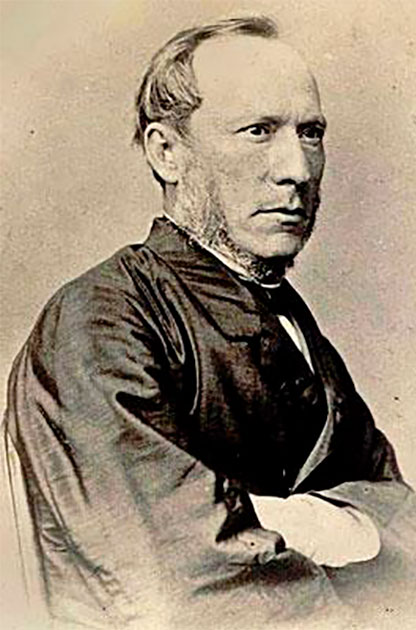
Cajetan Andreevich Kossovich
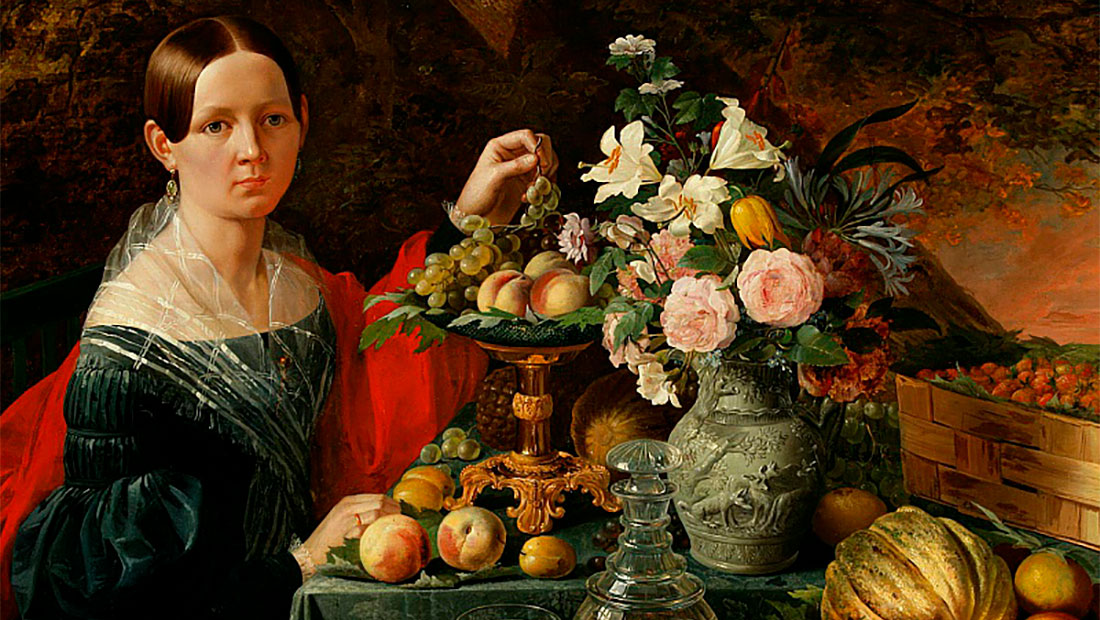
Ivan Fomich Khrutsky (1810-1885), another son of the Uniate priest got secondary art education at Polotsk Higher Piarists School. After moving to St. Petersburg, he took private lessons, studied at the Imperial Academy of Arts as a non-matriculating student, and then was a student of such well-known masters as K. P. Bryullov and F. A. Bruni. The young artist repeatedly received academy medals and was even awarded a gold watch by the Emperor Nicholas I. In 1839 I. F. Khrutsky became an academician of the Academy of Arts.
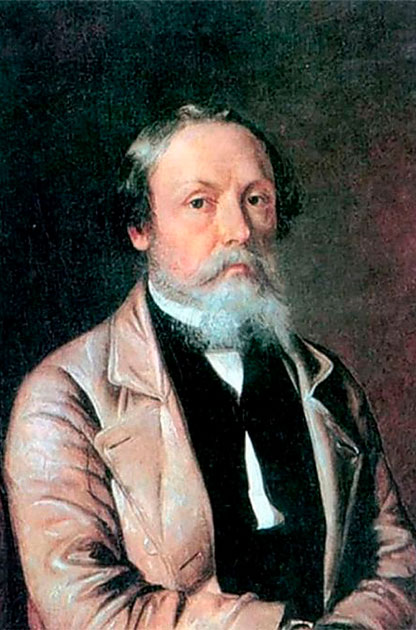
Ivan Fomich Khrutsky. Selfportrait (1884)
The artist gave preference to still-life painting. The unique artistic style and painter’s good taste contributed to the development of still-life painting in Russia. Khrutsky painted a lot of beautiful portraits in the last years of his life. Now his works are in the National Art Museum of Belarus, museums of Russia and Poland and in private collections.