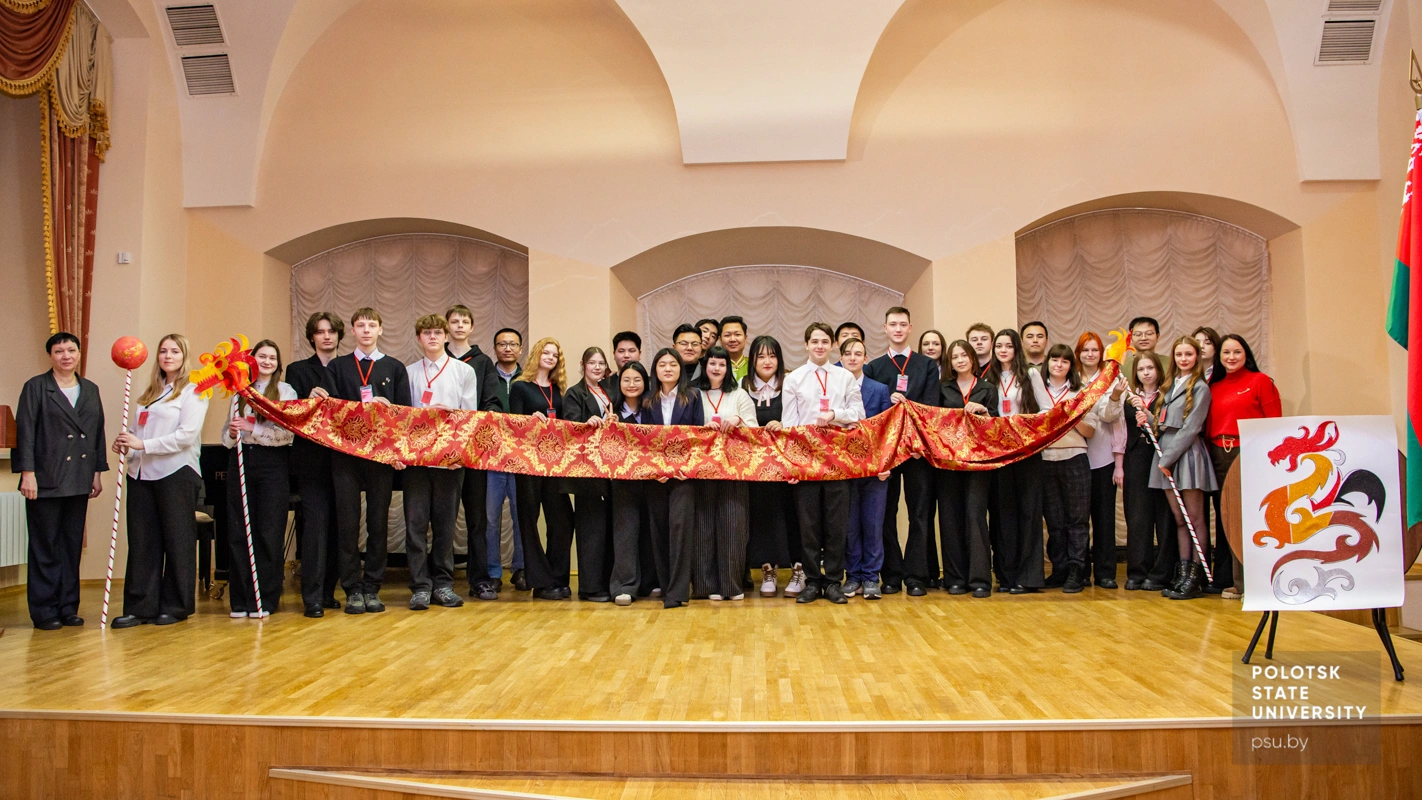


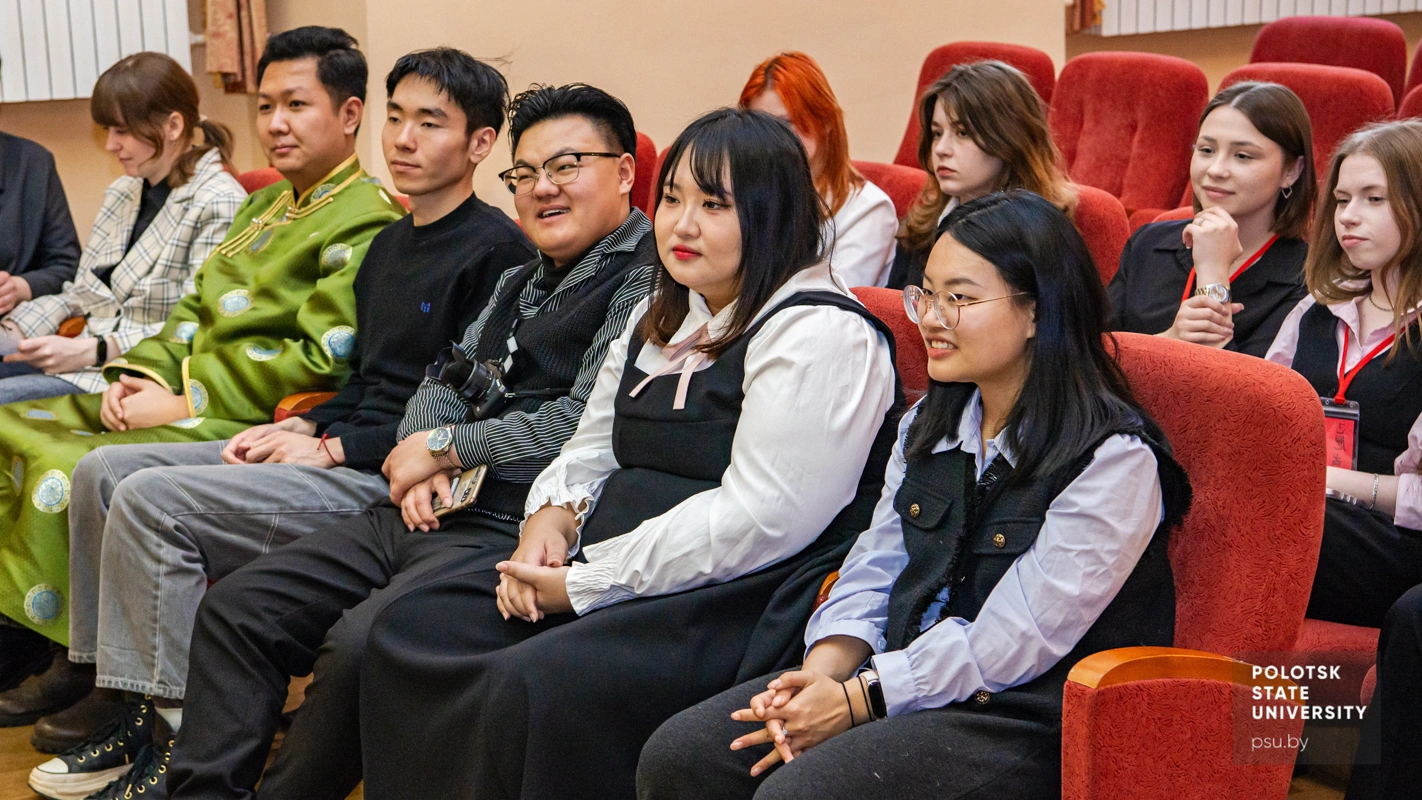
In early spring, an international group of Belarusian and Chinese students gathered at the Confucius Centre as part of the cross-cultural project "Together". The project is organized by the volunteer centre and the creative association of international students at Polotsk State University.
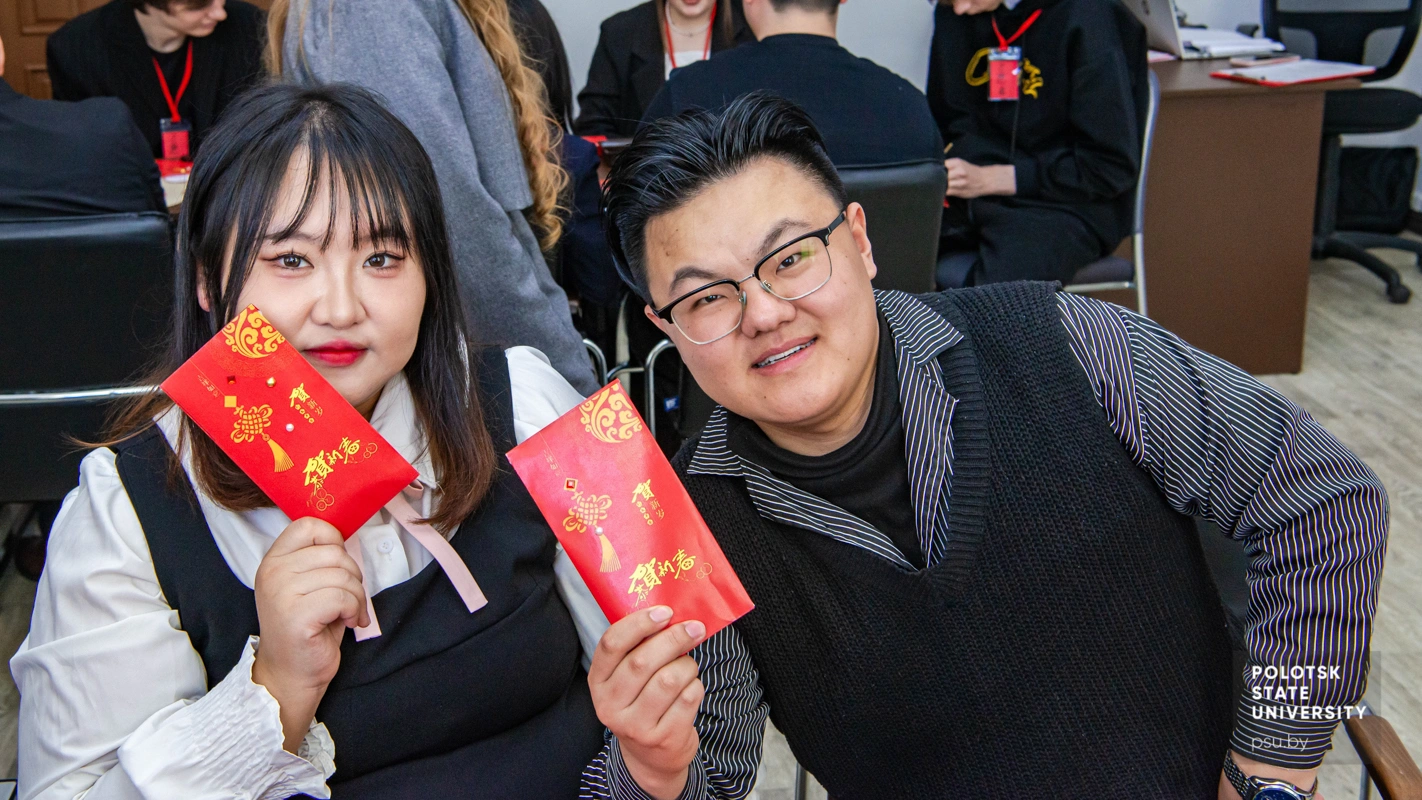
Chinese students
China is a vast country with a unique and distinctive culture. On this day, Chinese and Belarusian students came together to celebrate the traditions of the Spring Festival – "Chunjie" or the Chinese New Year. This is the most important and longest celebration in China, observed according to the lunar calendar for 15 days. It symbolizes the end of winter, the arrival of spring, renewal, and family reunion. In 2026, the holiday fell from February 17 to March 3.
At the beginning of the meeting, Belarusian students from all university faculties, guided by their guests, learned a few phrases in Chinese to greet and congratulate everyone on the arrival of the Year of the Red Fire Horse according to the Chinese calendar.
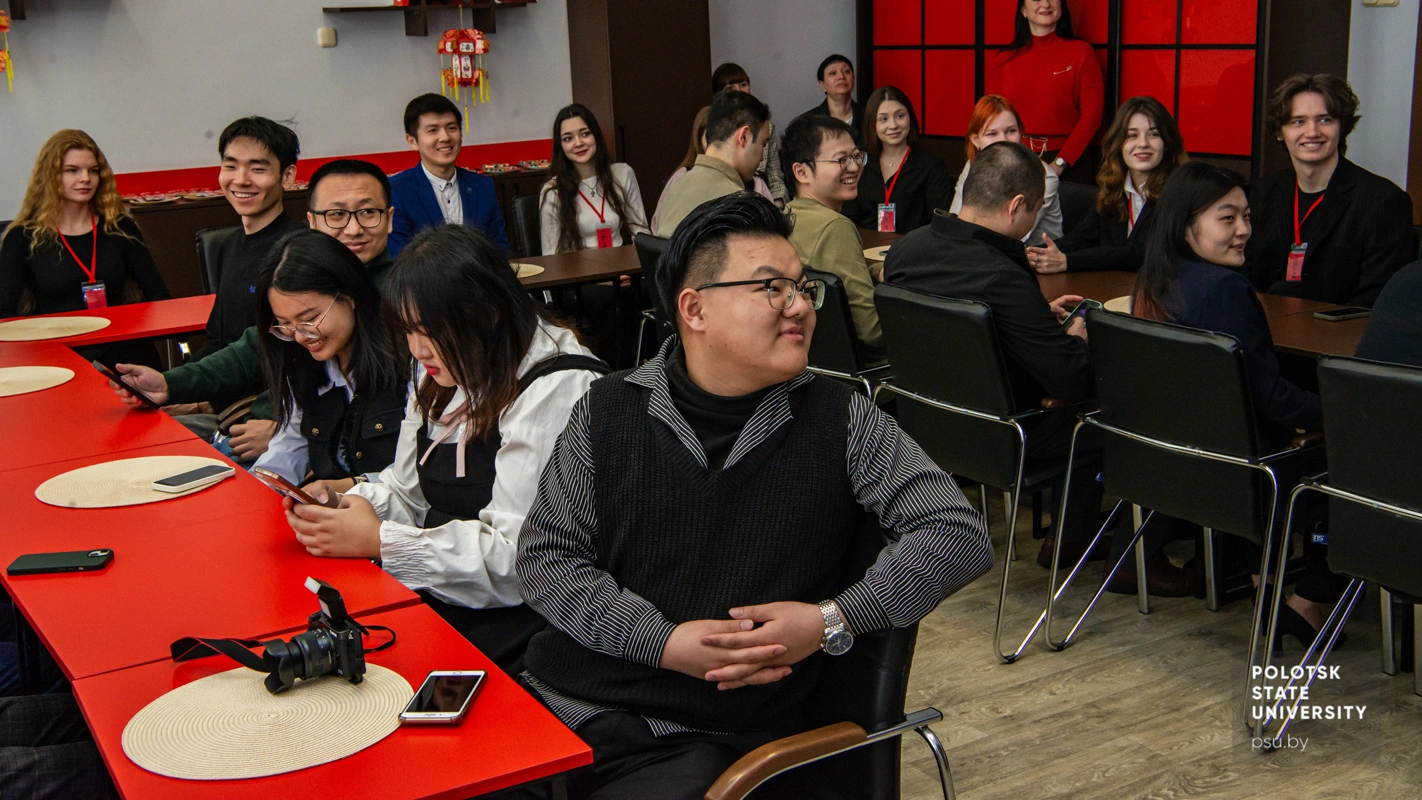
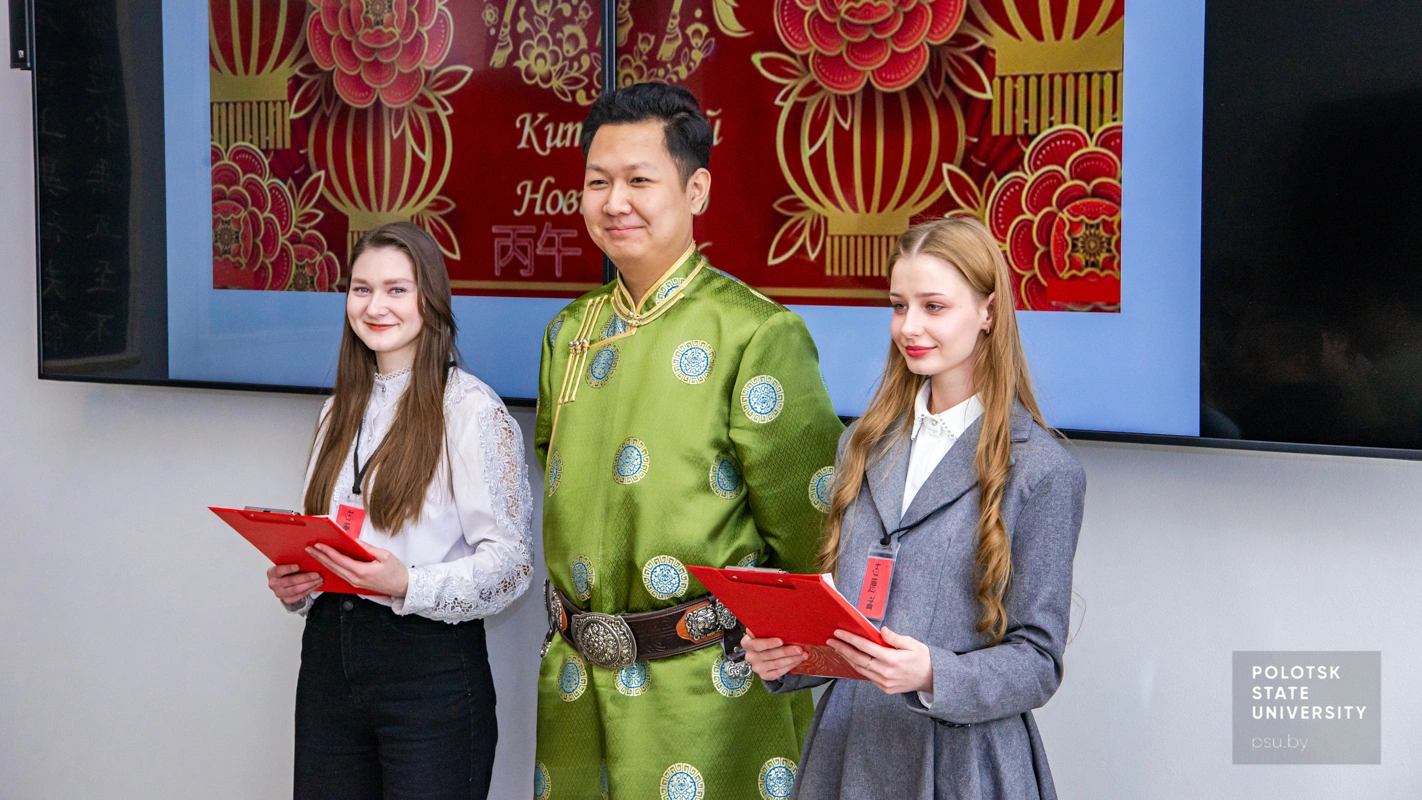
Learning phrases in Chinese
The programme offered participants not only a video presentation introducing the 12 main symbols of the holiday, but also plenty of interactive elements.
The students learned that in Chinese culture, the color red is believed to bring good luck. This is why, in anticipation of the New Year, Chinese people decorate their streets and homes in red and gold and dress in corresponding colors.
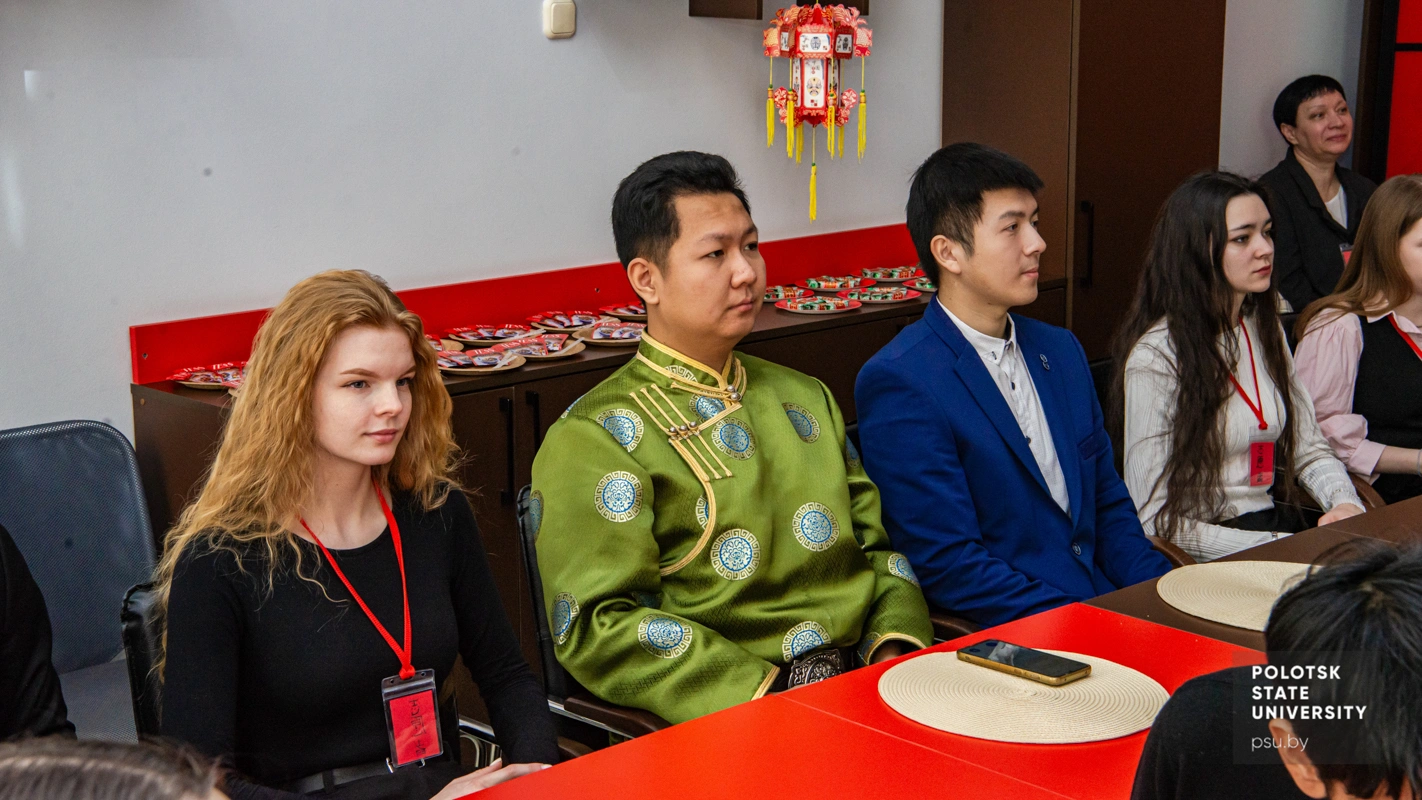
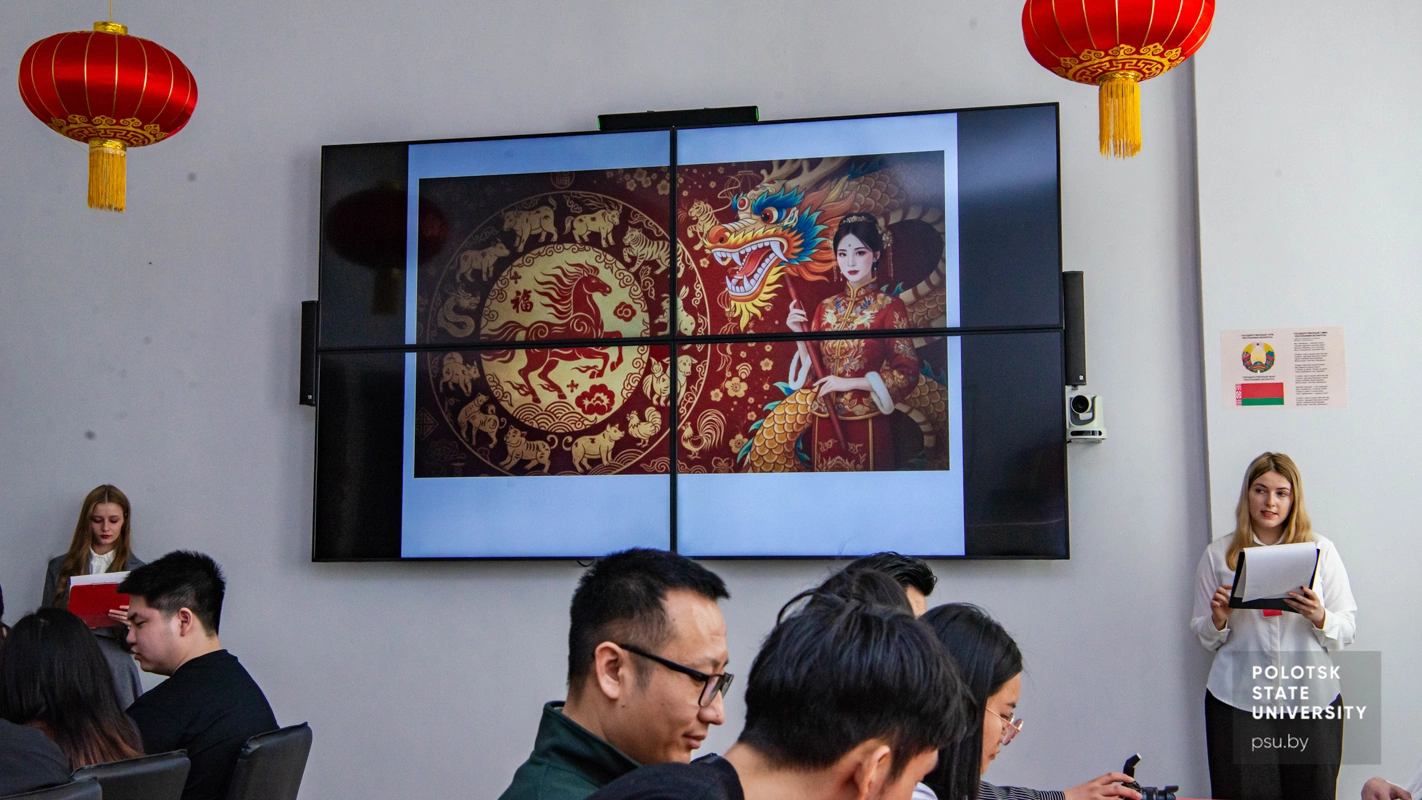
Presentation: "12 Symbols of the Chinese New Year"
In China, red lanterns are especially popular as decorative holiday elements. These round lanterns, adorned with calligraphy and symbols of prosperity, are believed to light the way to a happy New Year.
During the Spring Festival, Chinese people also place a square of red paper on their front doors with the character for "happiness" written upside down. This tradition stems from a play on words: the phrases "happiness arrives" and "upside-down happiness" sound the same in Chinese.
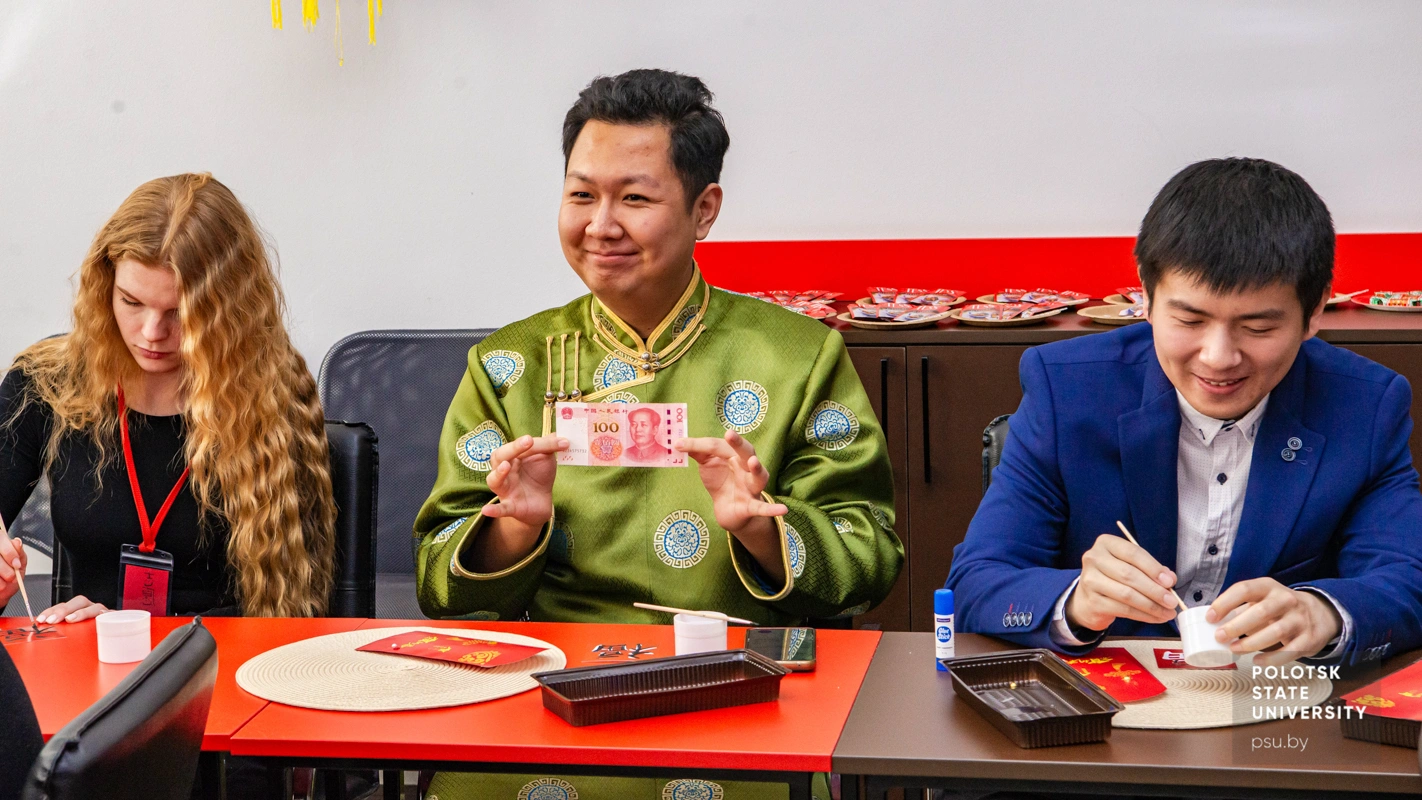
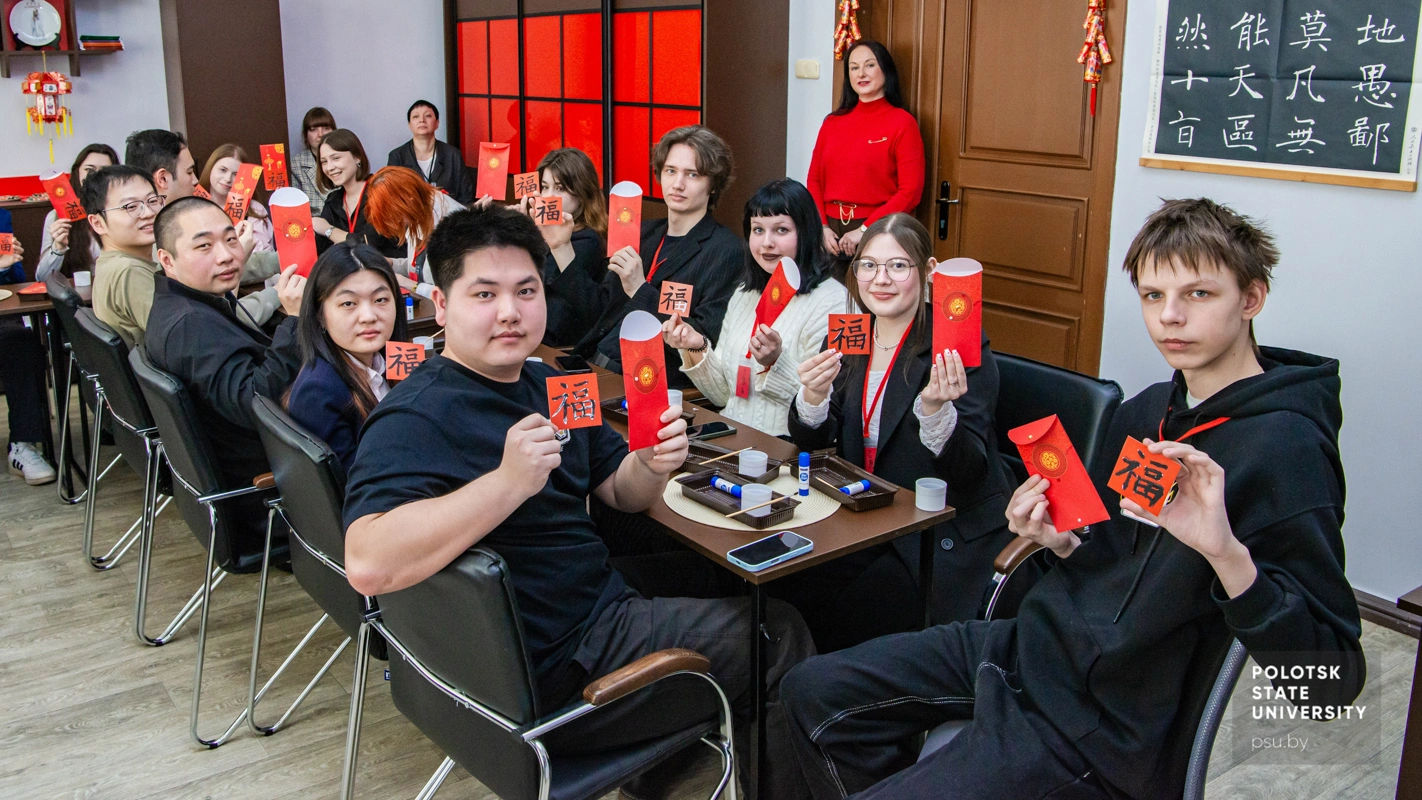
In light of this, participants at the themed event had the opportunity to try their hand at creating holiday decorations featuring the well-known Chinese character "fu".
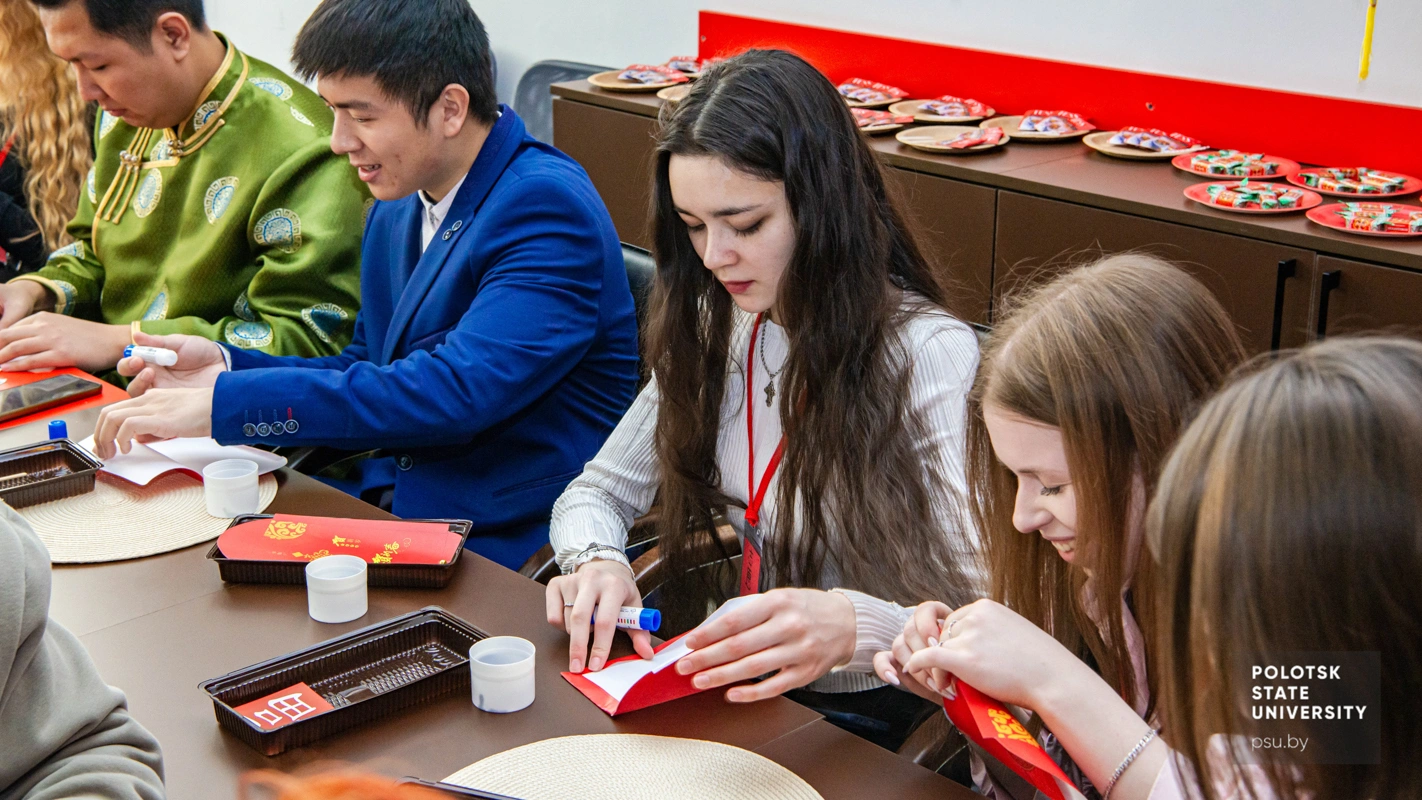
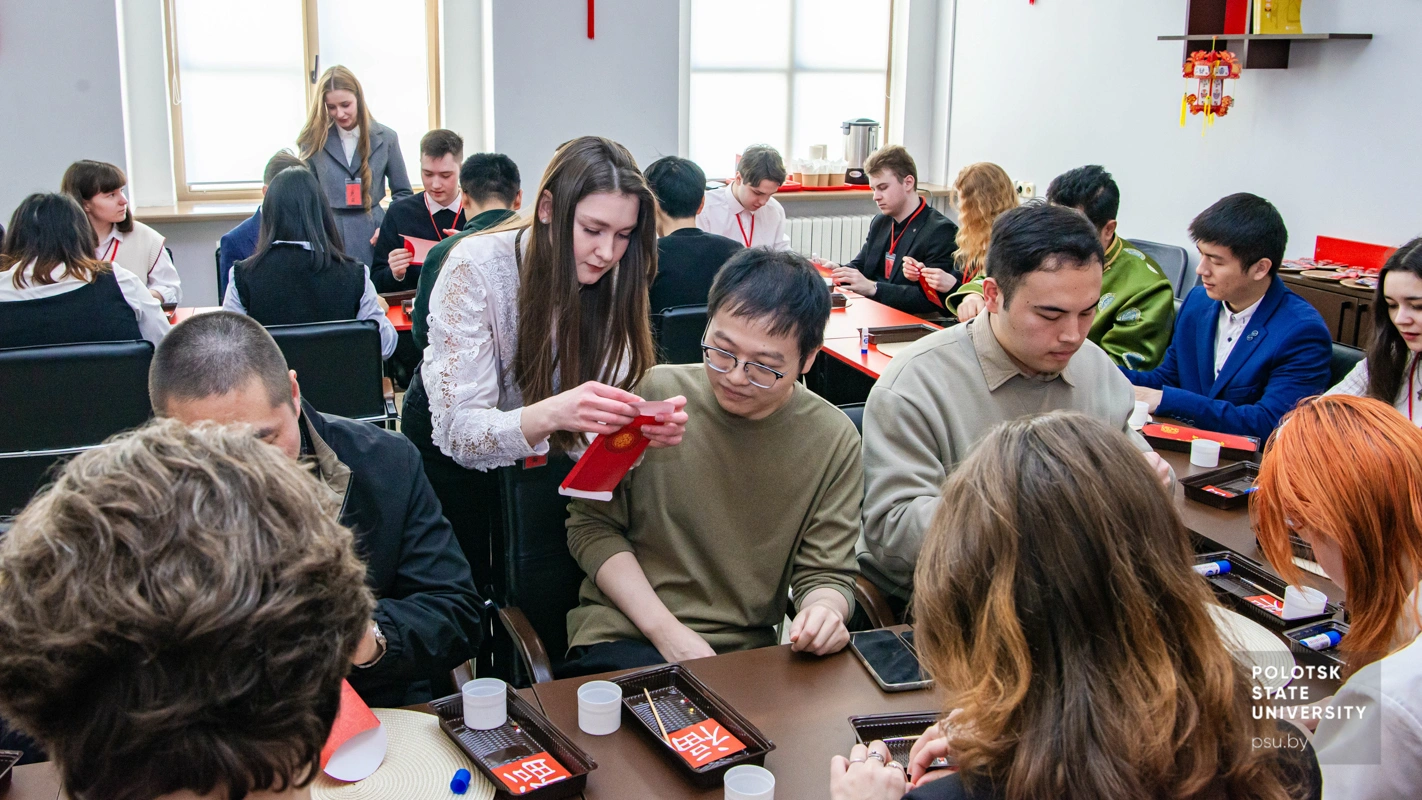
Creating of the red envelopes "hongbao" and character "fu"
One of the most popular gifts in China is the red envelope "hongbao". These envelopes, containing money, are given to family, friends, and colleagues. A red envelope is also a wish for well-being and prosperity, as well as a gesture of love and gratitude. Nowadays, it's also possible to send electronic red envelopes with money through mobile payment platforms, but paper versions remain in high demand.
During a workshop, Chinese and Belarusian students worked together to create traditional hongbao envelopes. They planned to give them to loved ones and friends or keep them as souvenirs.
Creating of the red envelopes "hongbao" and character "fu"
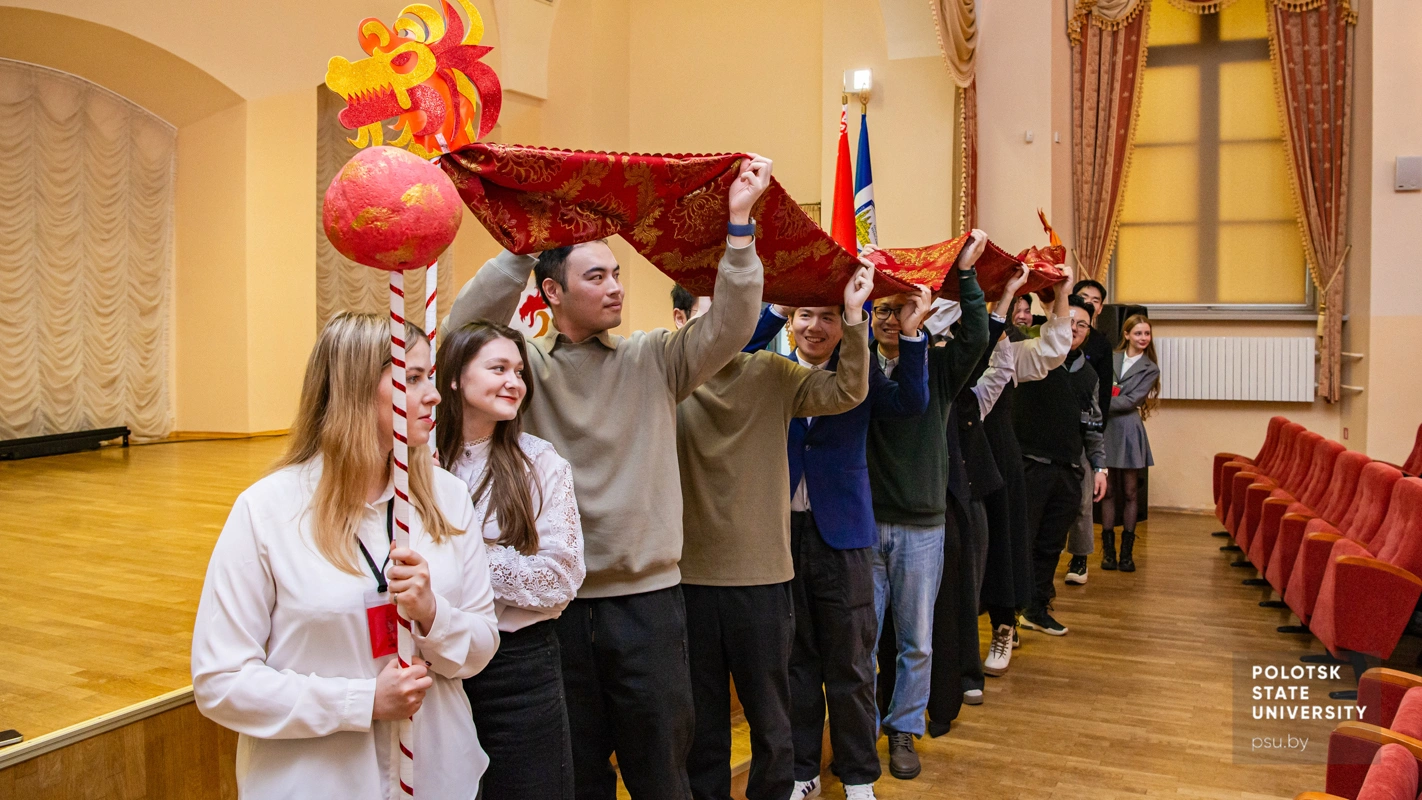
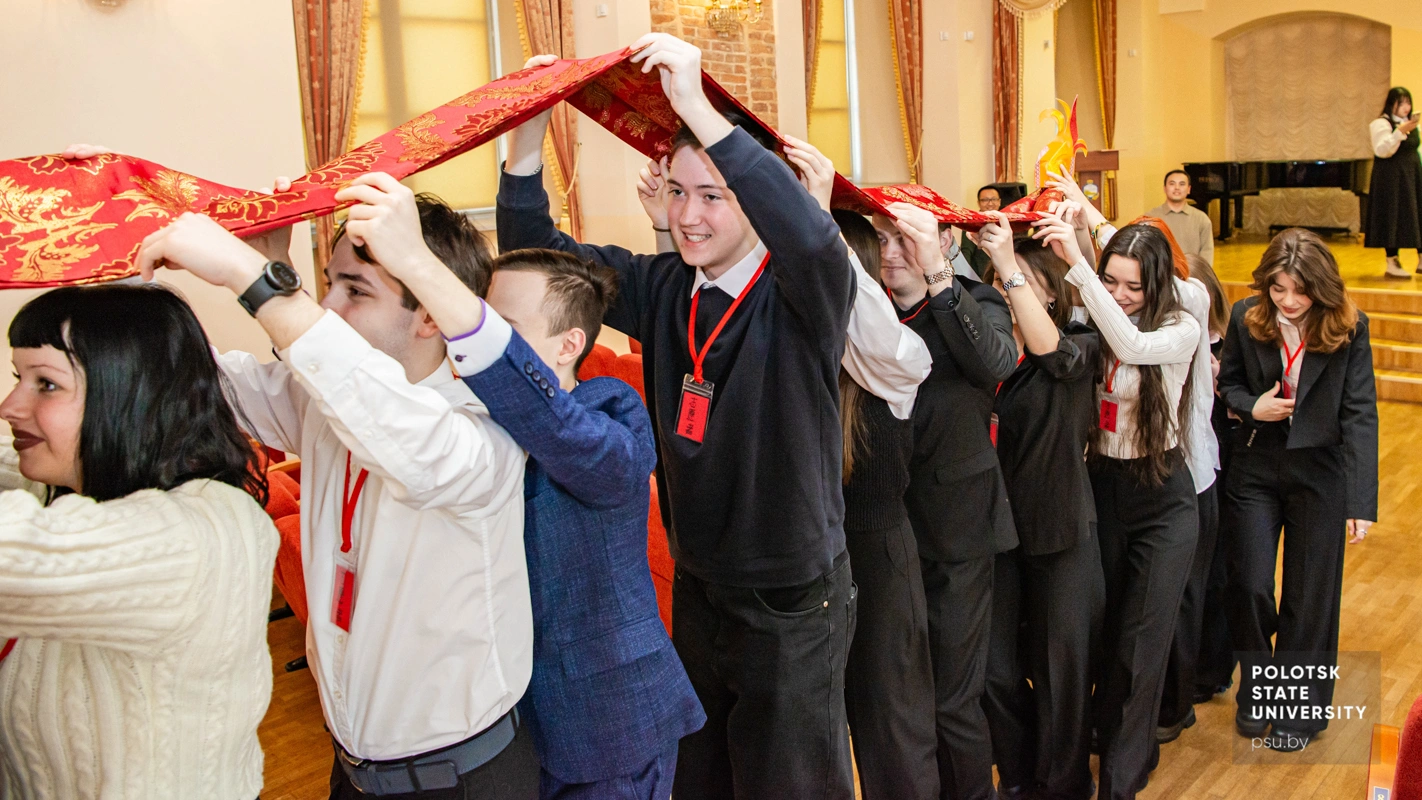
New Year celebrations in China are never complete without the symbolic Chinese dragon. According to tradition, the dragon brings luck, wealth, and prosperity in the coming year. Often, its silhouette is cut from red paper in the practice of "jianzhi" – a form of traditional Chinese folk art that was recently recognized by UNESCO as part of the world's intangible cultural heritage. Another popular tradition is the dragon dance, or "wu long", where performers follow one another in a line to increasingly fast-paced music, mimicking the movements of this mythical creature as it chases a lantern that guides its path.
Dragon Dance Interpretation
Belarusian and Chinese students took part with great enthusiasm in two collaborative activities: creating a mosaic panel depicting the Chinese dragon and performing their own interpretation of the festive procession dance.
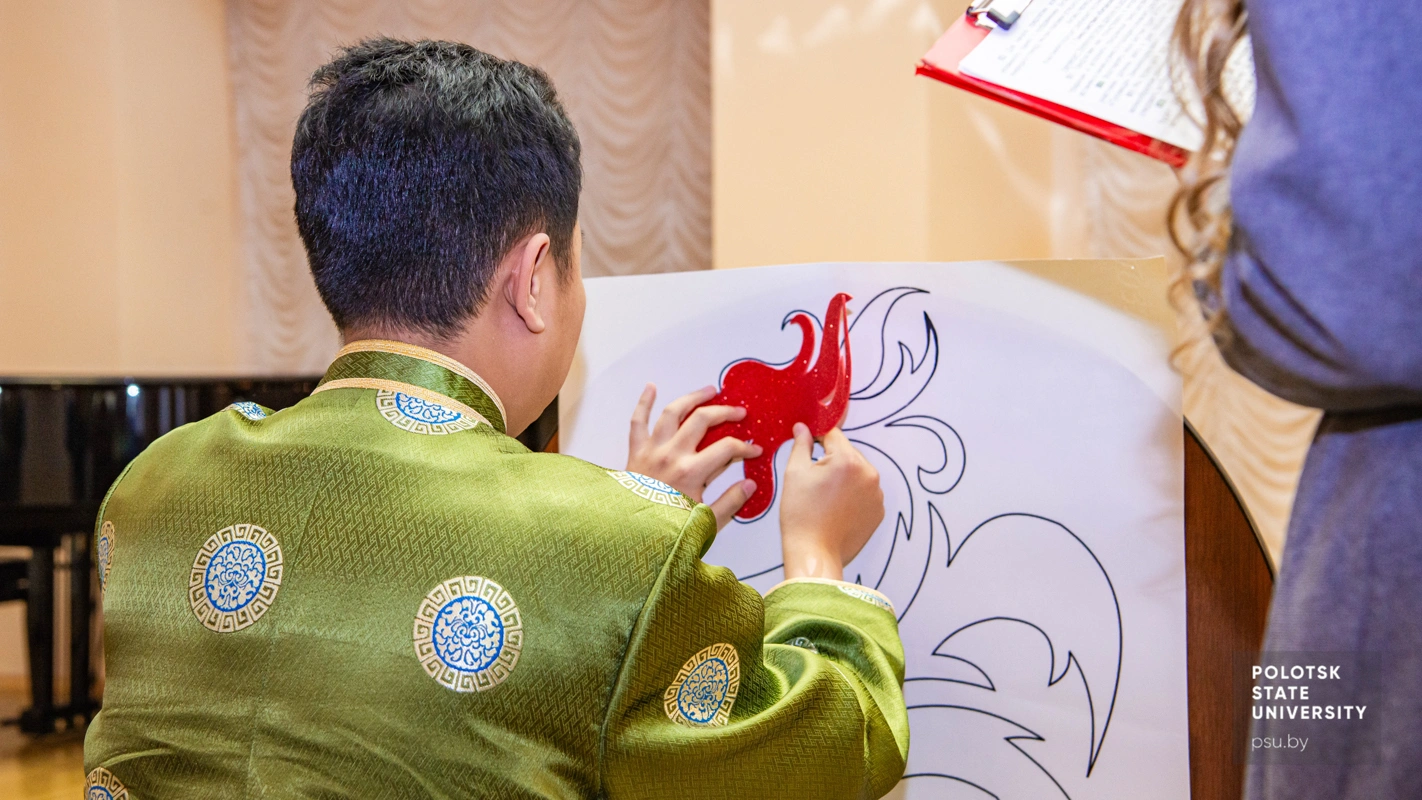
Creating a "Chinese Dragon" mosaic panel
According to ancient Chinese tradition, New Year celebrations call for making plenty of noise: lighting fireworks, setting off firecrackers, and scaring away evil spirits.
Another important element of the holiday in China is the traditional tea ceremony. In Chinese culture, this is a complete ritual – a unique interplay of fire, water, tea leaves, space, and state of mind.
The international gathering ended with a friendly tea party where students sampled Chinese and Belarusian sweets, lit a small farewell firework, and applauded the organizers, the Chinese students, and each other for a wonderful evening.
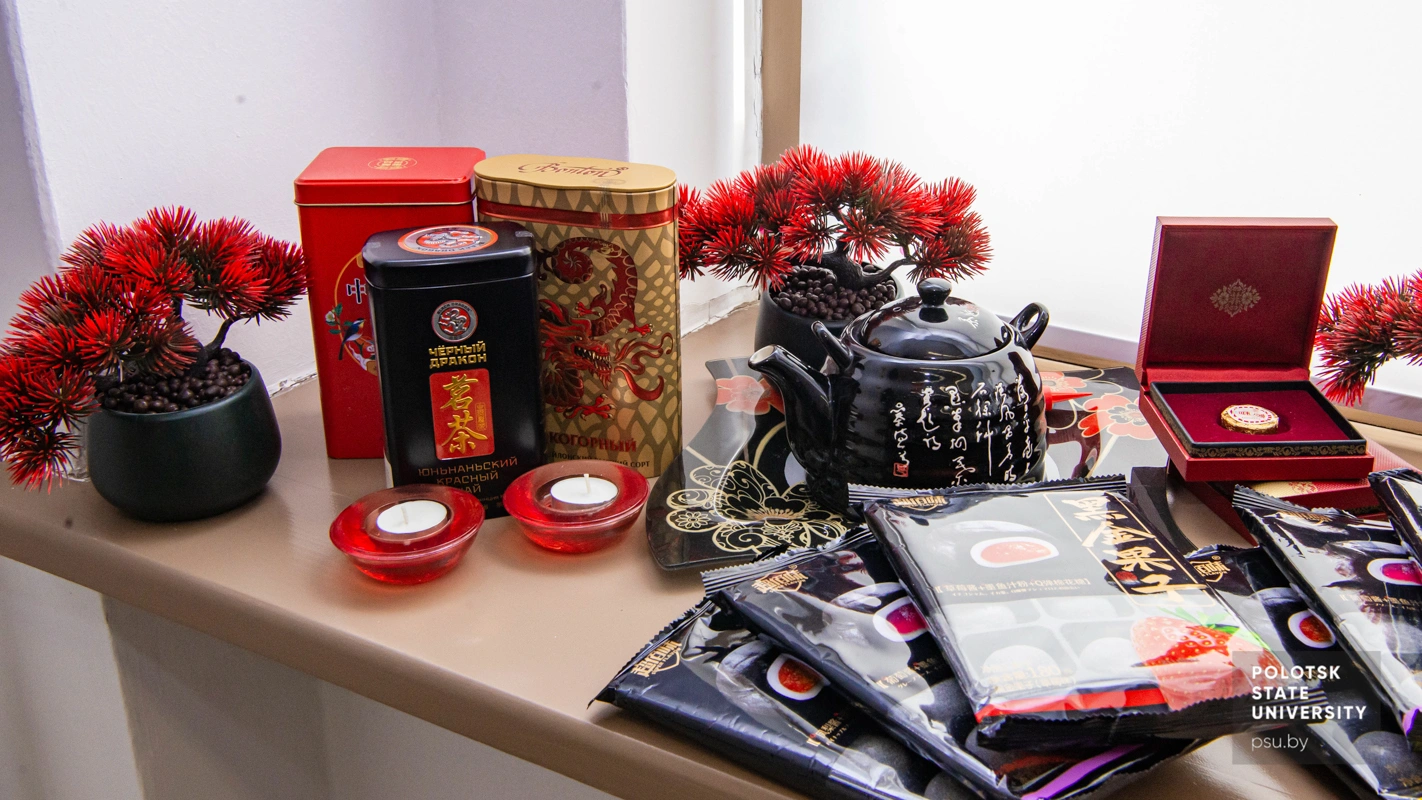
Tea party in Chinese style
Sun Fengshuo, a master's student in the Faculty of Mechanics and Technology: "Today was very interesting. I'm glad I could take part in this event. I talked with the Belarusian students and could feel their interest in Chinese culture".
Chen An, a master's student in the Faculty of Law: "The event was very well organized – I felt like a VIP. The inclusion of dragon-themed elements made me appreciate how thoughtfully everything was planned. The volunteers were full of enthusiasm and smiles, creating a very welcoming atmosphere".
Margarita Yankovskaya, Specialist at the Department of Ideological and Educational Affairs and Volunteer Center Coordinator: "This is the third time we have celebrated Chinese New Year at the university, but the first time at the Polotsk Collegium. The venue is absolutely perfect for an event like this. At the Confucius Centre, you can immediately feel the atmosphere of the Spring Festival! We would like to thank the university's Tourist Center for their technical support".
Elena Konovalova, specialist for work with international students at the Department of Ideological and Educational Affairs: "For the Chinese students, this event was an opportunity to feel at home while far away from their homeland. For the Belarusian students, it was a chance to immerse themselves in the philosophy and beauty of Chinese culture.
This is precisely the main goal of the cross-cultural project “Together” – to create moments like these, where students from different countries find joint activities both interesting and comfortable, and they become one friendly international team".