




Polotsk State University (since 1993)

Polotsk State University (since 1993)
At Ernst’s Babenko initiative in 1992, NPI authorities have repeatedly proposed to the government bodies to create Polotsk University Named After F. Scorina based at NPI. The initiative was supported by Polotsk and Novopolotsk City Councils of People’s Deputies.
According to the Decree of the Council of Ministers of the Republic of Belarus № 618 of September 14, 1993, Novopolotsk Politechnic Institute was transformed into Polotsk State University. Its belonging to Polotsk land proclaimed in the name has a historical background. Polotsk has been the largest educational and cultural centre in Belarus from time immemorial. Polotsk preserved the buildings of the former Jesuit College (Academy) that is shown in the heraldic sign and flag of the university as a legal successor of Polotsk land traditions dating back to 1581. By an order of the Ministry of Education of the Republic of Belarus, Ernst Babenko, Doctor of Engineering, was appointed rector of Polotsk State University.

First Rector of Polotsk State University Ernst M. Babenko
Due to the institute transformation into a university, significant changes happened to its structure. The Faculty of Law and the Faculty of History and Philology were created there to make PSU meet the standards of a public European university. Besides, new specialities for postgraduate studies were opened and three councils for theses defence were created. The number of research works and development projects, patents and scientific publications increased. Polotsk State University became the main organisation for Vitebsk region innovation programme implementation.
International activity of PSU grew at a rapid pace. On a competitive basis, PSU won grants and implemented a number of major educational projects together with German, British, Swedish, Italian and Spanish universities. As a result, PSU used European experience in organising master’s degree programmes, student self-governance centres and etc.
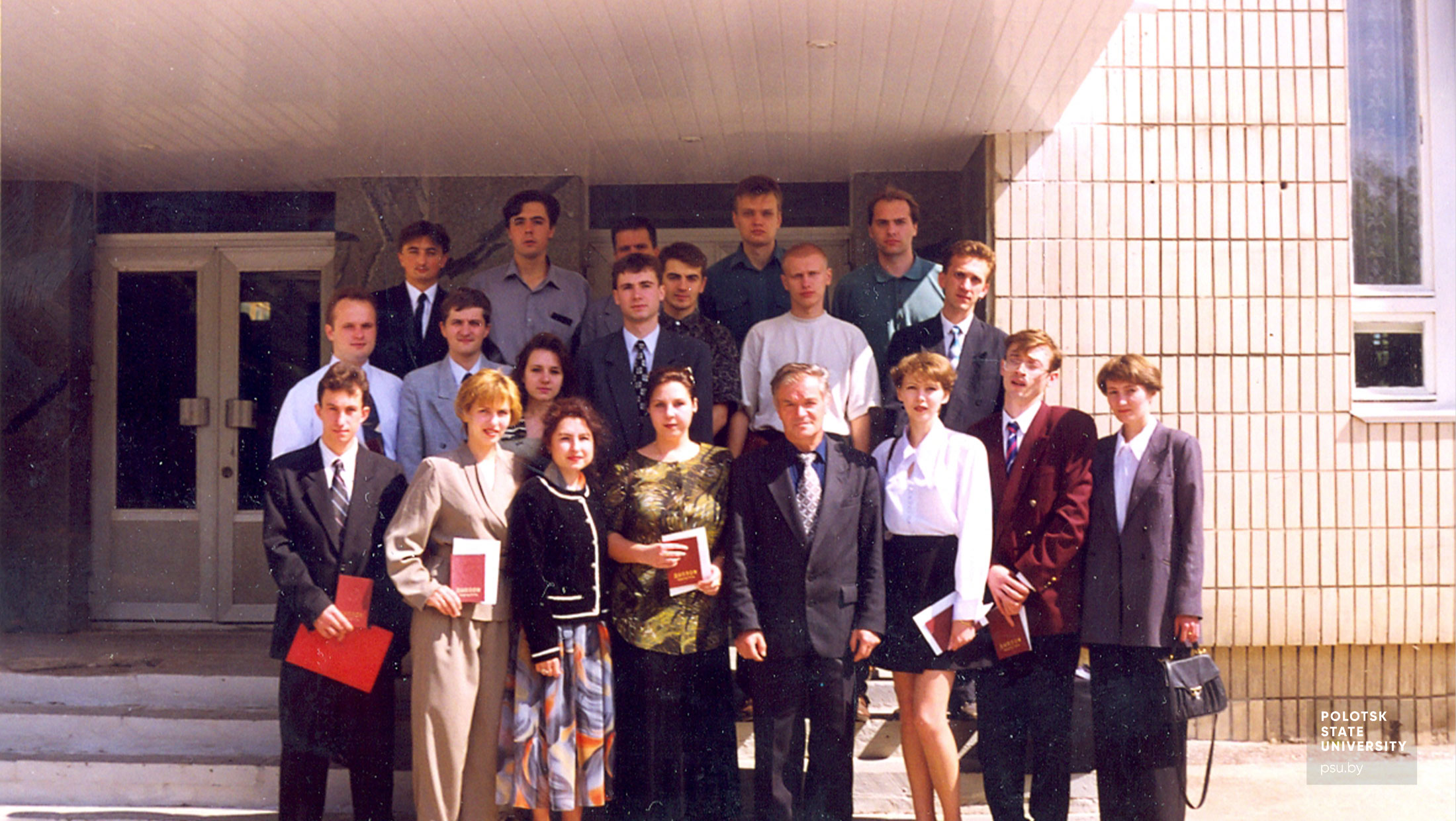
The First Master’s Students Graduation at PSU
The rapid development of Novopolotsk Polytechnic Institute and then of Polotsk State University allowed to set new ambitious goals. Already from the 90s, NPI authorities, Polotsk Government Bodies, academic figures and cultural workers of Belarus and Polotsk raised the question of transferring the buildings of the former Jesuit College to the institute. After establishing Polotsk State University, the things started moving forward.
By a decree of the Council of Ministers of the Republic of Belarus of October 18 of 1993 “On Measures for the Further Development of Polotsk and the Preservation of Its Cultural and Historical Heritage”, Vitebsk Regional Executive Committee together with Belarusian Military District were appointed to consider the question of vacating the buildings of the former Polotsk Jesuit College (there was a military hospital) to transfer the buildings to the Faculty of History and Philology of PSU.
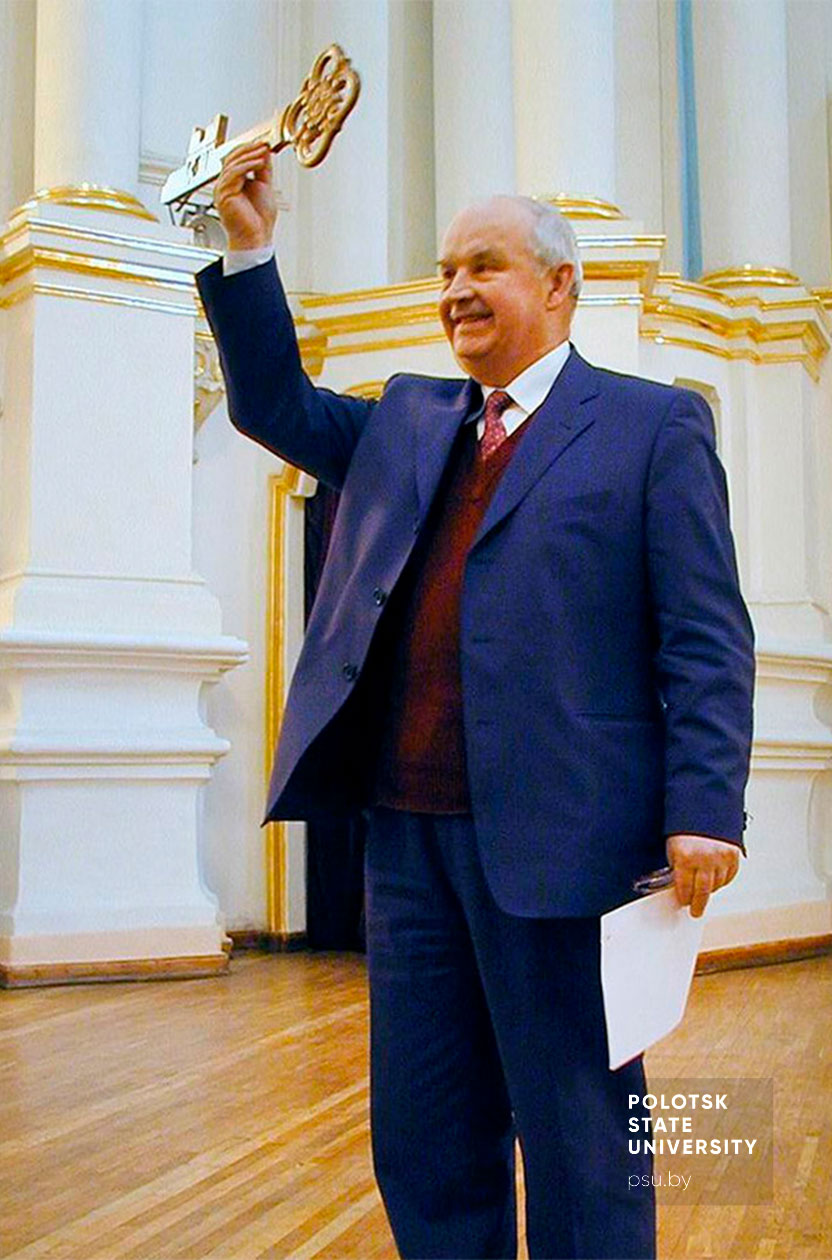
While implementing the decree, people faced numerous problems. Nevertheless, due to university authorities’ persistence and energy the objective was achieved. Under the Protocol of the Orders of the President of the Republic of Belarus made during the visit to a number of Polotsk and Novopolotsk enterprises and institutions on September 1 of 2001, the Ministry of Defence transferred the buildings of the former Jesuit College and Cadet Corps to Polotsk State University. A solemn ceremony of transferring the historical buildings took place in February of 2003. Thus, the lecturers and students became the owners of one of the oldest university campuses on the post-Soviet land and the oldest one in Belarus. The Faculty of Humanities and the Faculty of Information Technologies occupy the buildings now.
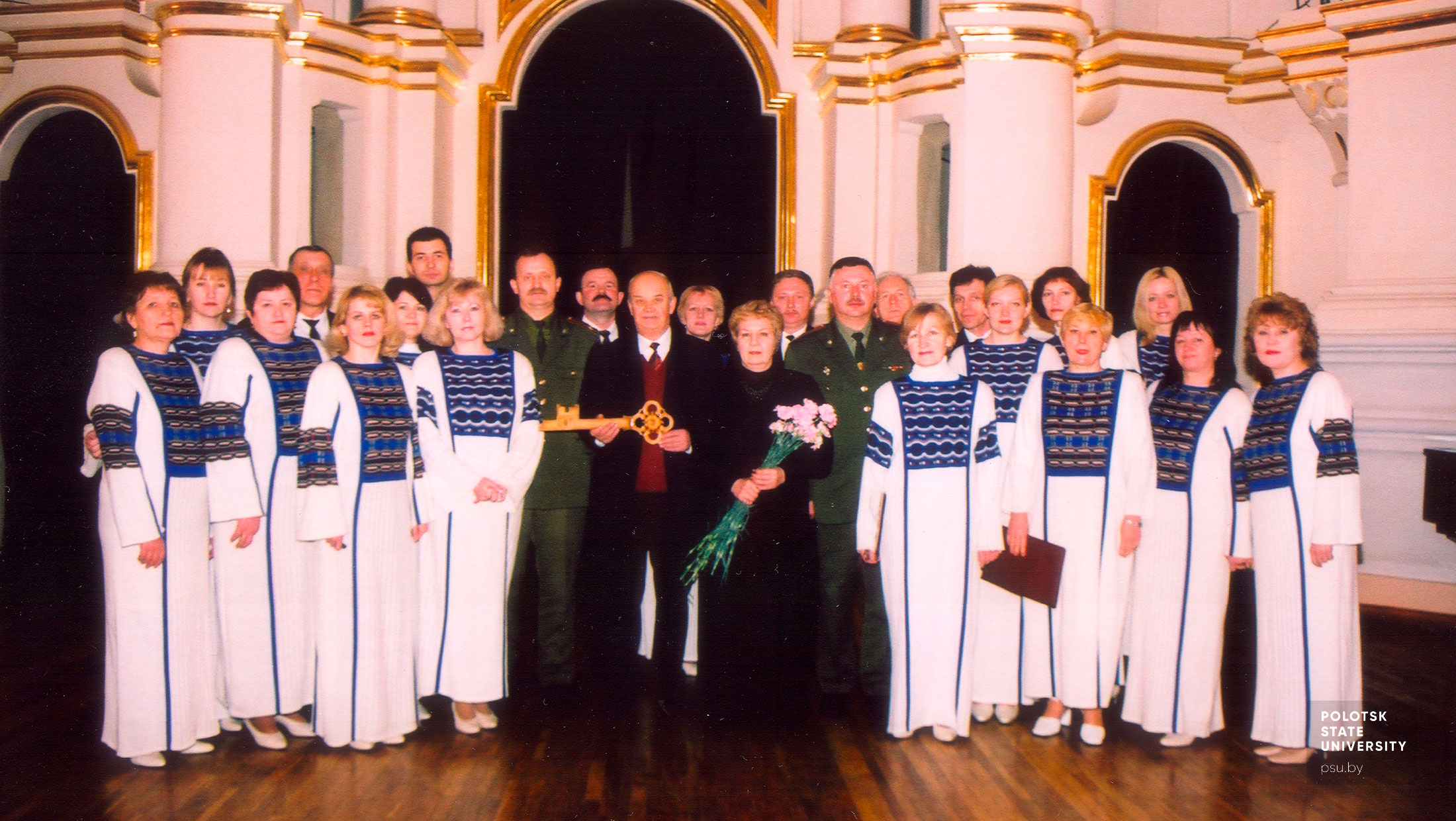
A Solemn Ceremony of Transferring the Historical Buildings of Polotsk College to Polotsk State University on February 21 of 2003 (photo 1)
First Rector of Polotsk State University Ernst M. Babenko with the Key (photo 2)
The buildings were in a deplorable state and required significant reconstruction and the adjacent territory needed to be improved. In 2005/2006 academic year, most of the Polotsk College buildings were ready to open its doors to the students and lecturers. In addition to the classrooms, there was an office of a university Scientific Library with a media centre, a computerised reading room and a Centre for Swedish Culture. Over time, a concert hall and two dining rooms appeared in the renovated buildings of Polotsk College. After reconstructing the former outbuilding, a Sports and Leisure Centre was opened. There was a fitness centre and a gym on the ground floor and a large disco hall on the first floor.

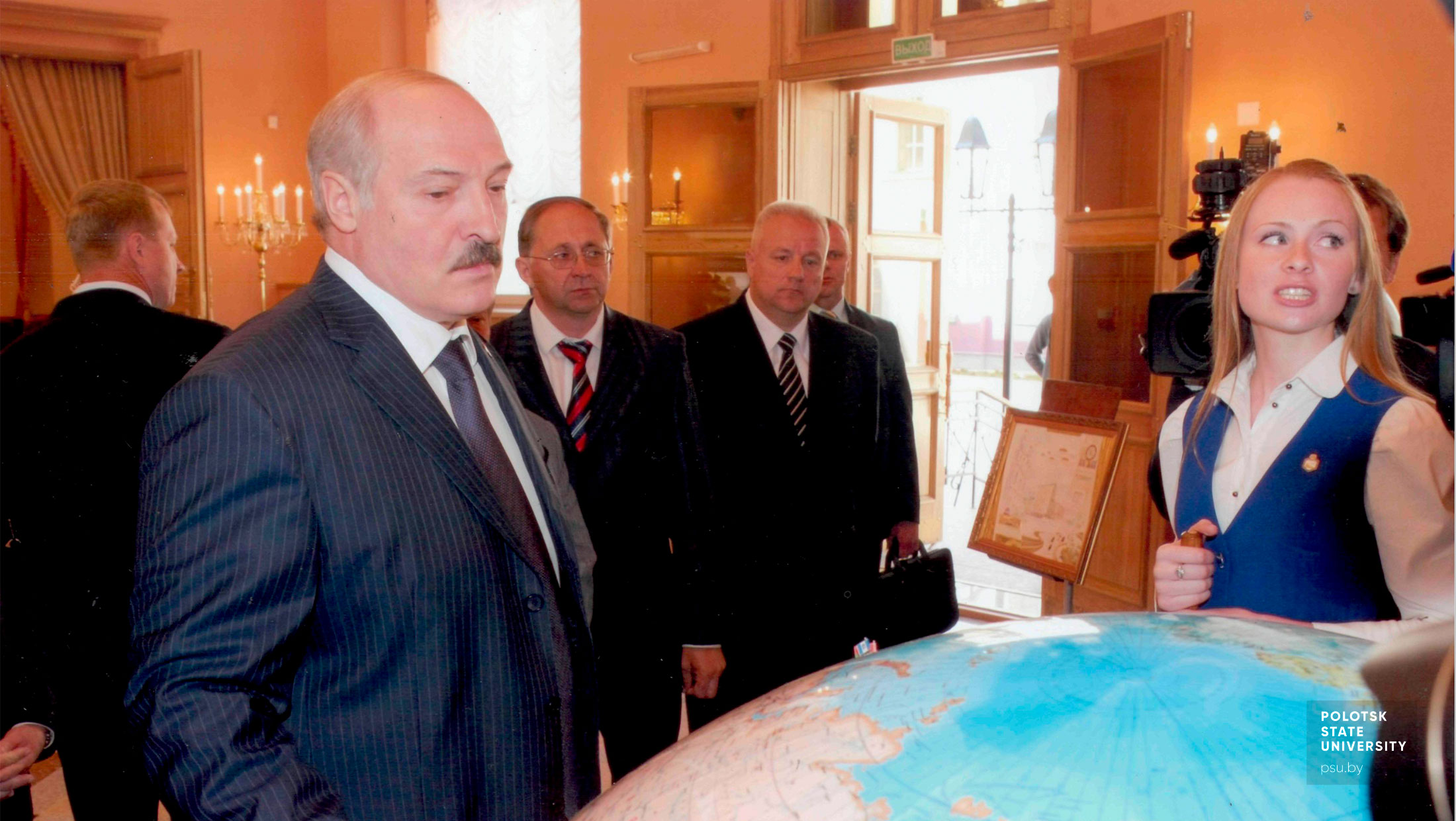
The President of the Republic of Belarus Alexander Lukashenko Visits the Scientific Library of Polotsk State University (photo 1)
A Tour Around Polotsk College for the President of the Republic of Belarus (photo 2)
The territory around Polotsk College becomes more and more beautiful. In November of 2010, a sculpture of a renaissance age student, that symbolizes a long education history on Polotsk land, appeared in the outer yard of Polotsk College. One more sculpture appeared there in May of 2017. It was a bronze sculpture “Professor of Polotsk Academy” that embodies the image of a wise mentor carrying the light of knowledge and cultivating love of truth
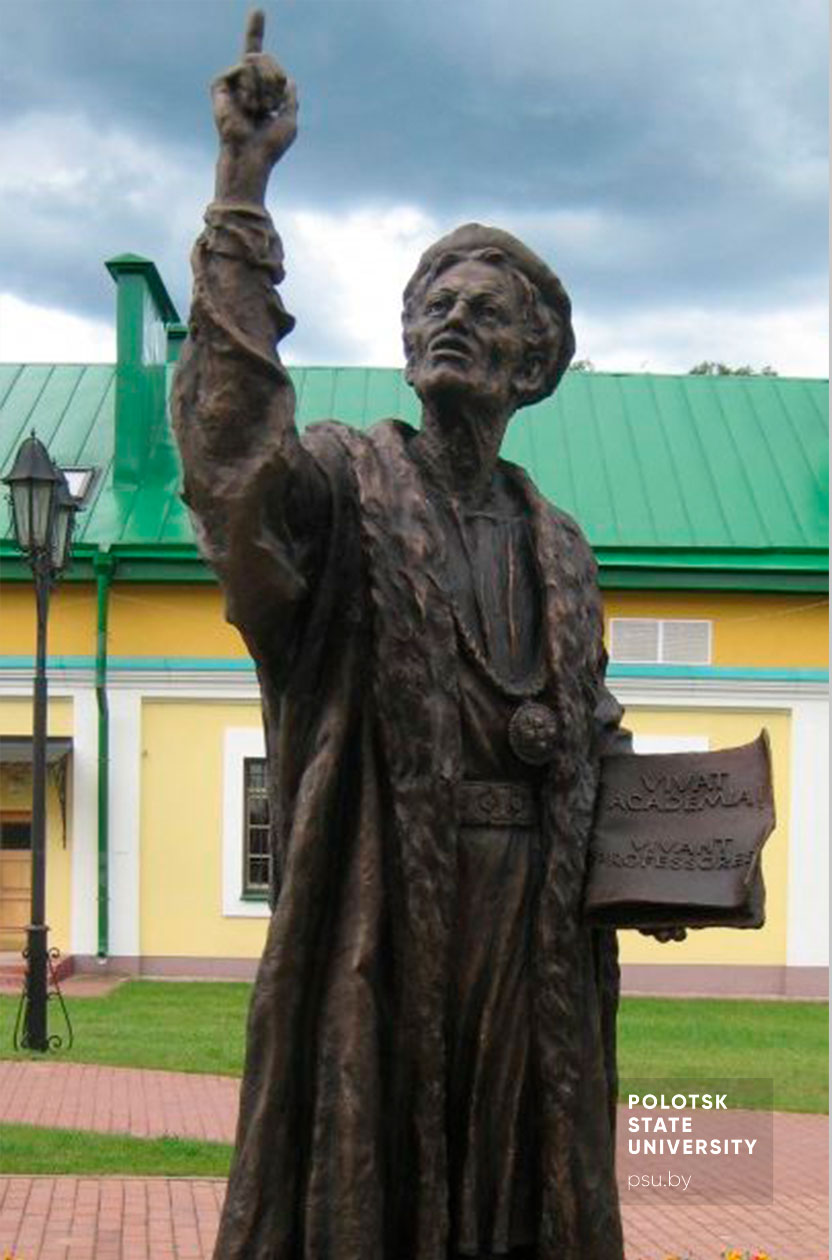
«Professor of Polotsk Academy»
A cozy inner yard is the favourite place for students, lecturers, university guests and numerous tourists. A solemn opening of a musical clock with an academic procession took place in May of 2011 to celebrate the Day of the University. The idea of creating it was brought by the Jagiellonian University in Krakow and by the famous Prague Astronomical Clock. The procession of prominent historical figures of Polotsk land occurs every hour to “Gaudeamus”, a popular academic song in many European countries. Among the prominent figures there are Saint Euphrosyne of Polotsk, book printer Francisk Skorina and first rector of Polotsk College Piotr Skarga.
PSU presented one more valuable gift to the residents and visitors of the ancient city in May of 2012. A well was restored in the inner yard. It appeared in Polotsk College in the second half of the XVIII century. Its bottom was approximately on the same level as the bottom of the Western Dvina (27-28 meters), which made it possible to provide the college with water even in the drought season. The President of the Republic of Belarus Alexander Lukashenko attended a solemn ceremony of opening the renovated well.
An art project “Art in the History of Polotsk College” appeared in the inner yard in May 2014. It was designed to restore the once lost cultural peculiarities of Polotsk land and recreate a visual and aesthetic series that was characteristic of the educational process of the XVIII – the first half of the XIX century on the college territory. Today, reproductions of paintings by famous artists, along with the clock and the well, are authentic decorations of the university complex in Polotsk.
The beauty and greatness of Polotsk College buildings, a cozy inner yard with the well and the clock, vaulted ceilings and spacious corridors transfer us several centuries ago as if we were in a time machine. The hall of the historical costume, opened in 2014, helps to visualize the past and present its heroes. Visitors get the opportunity not only to see how representatives of different periods of Polotsk College history looked like, but also to get acquainted with its most important events from the time of Stephen Báthory and Piotr Skarga to the present day.
Another attraction appeared at Polotsk College in 2015. The grand opening of a copy of the "Mechanical Head" by Gabriel Gruber was dedicated to the University Day. The “Mechanical Head” is able to answer any questions asked in two state languages: Belarusian and Russian, in the main European languages, as well as in Latin. The main difference is that it is made of silicone and is driven by a modern microcontroller control system.
The tremendous effort of scientists, builders and restorers who preserved and brought back to life a great number of architectural and historical monuments, created new objects, became the basis for the continuation of the old education traditions and the emergence of the new ones on Polotsk land.
In recent years, the appearance of the PSU buildings in Novopolotsk has changed as well. Modern classrooms and laboratories, well-designed interiors and comfortable recreations form a safe, healthy, functional and aesthetically pleasing environment for students and lecturers to work and relax. Creative ideas, started at the restored Polotsk College are being continued at Novopolotsk campuses. Thus, a bronze sculpture of a modern student appeared in the foyer of the main university building in 2011. And in 2014, the “Four Seasons” Clock decorated the wall of the main university campus. The clock face changes its colour depending on the season. The territory adjacent to the university buildings in Novopolotsk is being improved as well. The solemn opening of the “HyPar” installation took place in 2017. “HyPar” is a hyperbolic paraboloid of Gaussian double curvature.
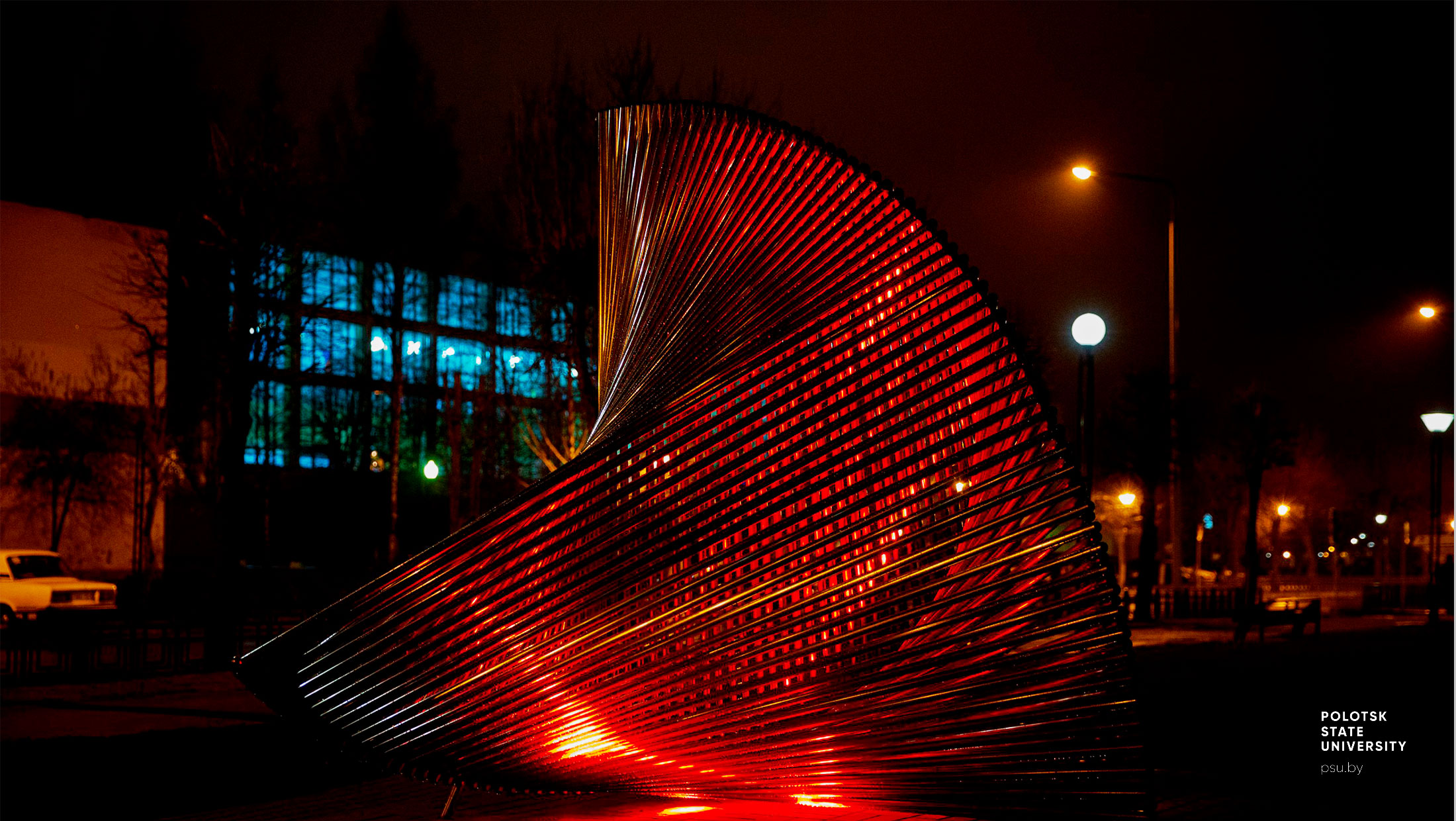
“HyPar” Installation
A rapid updating of the material base of Polotsk State University in the beginning of the XXI century made it possible to build one more campus. The campus is situated in Mezhdurechye and is a modern educational laboratory building. The students specializing in “Physical Training” and “Jurisprudence” occupied the building in 2016. In April of the same year, the first in Belarus Regional Educational, Scientific and Practical Law Centre was created on the basis of the Faculty of Law of PSU.

